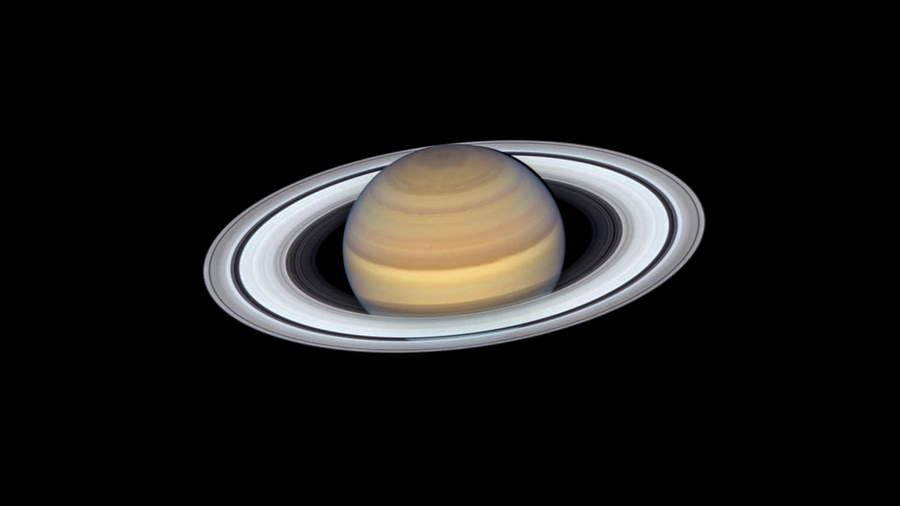
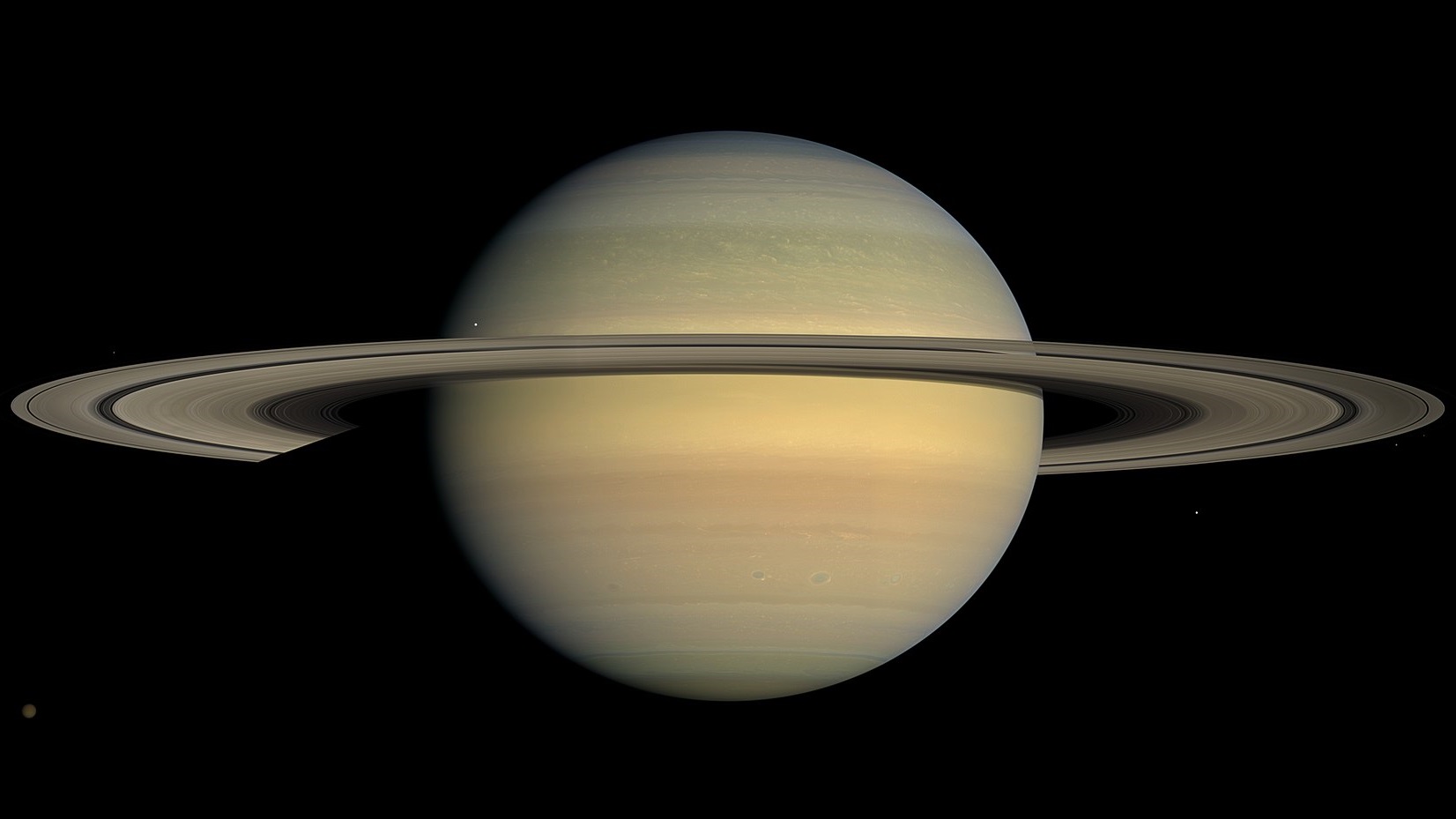
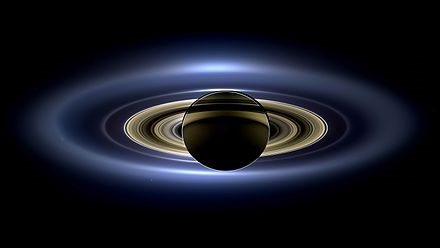
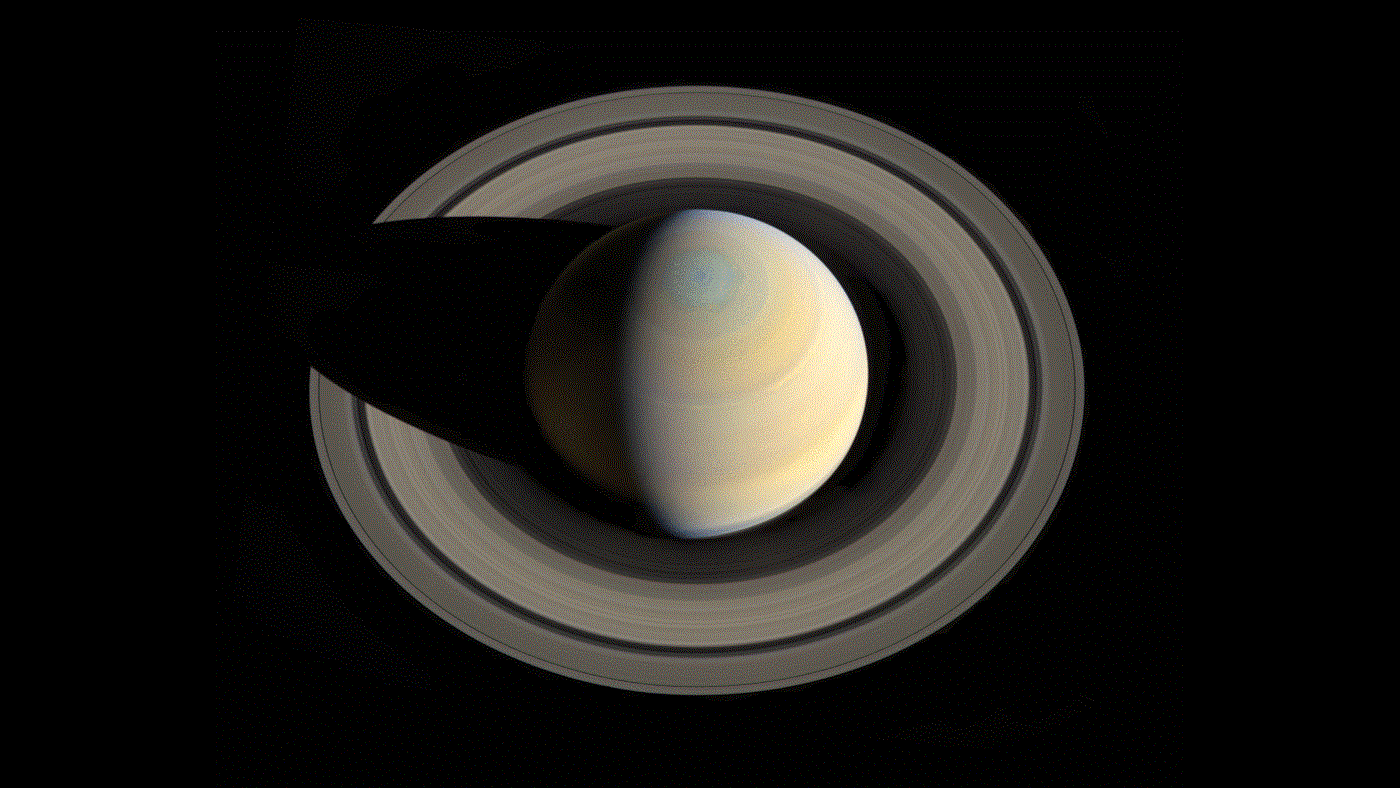
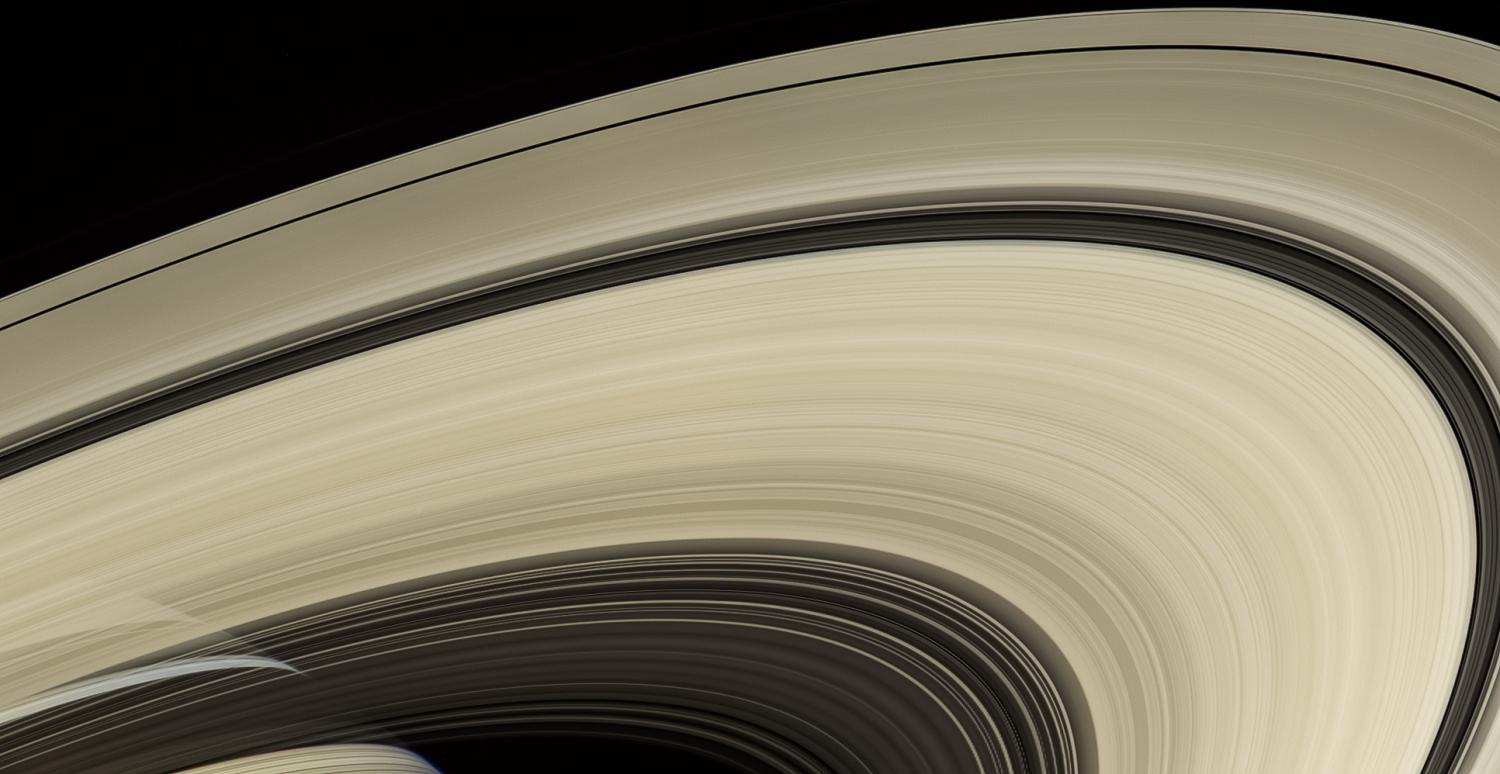
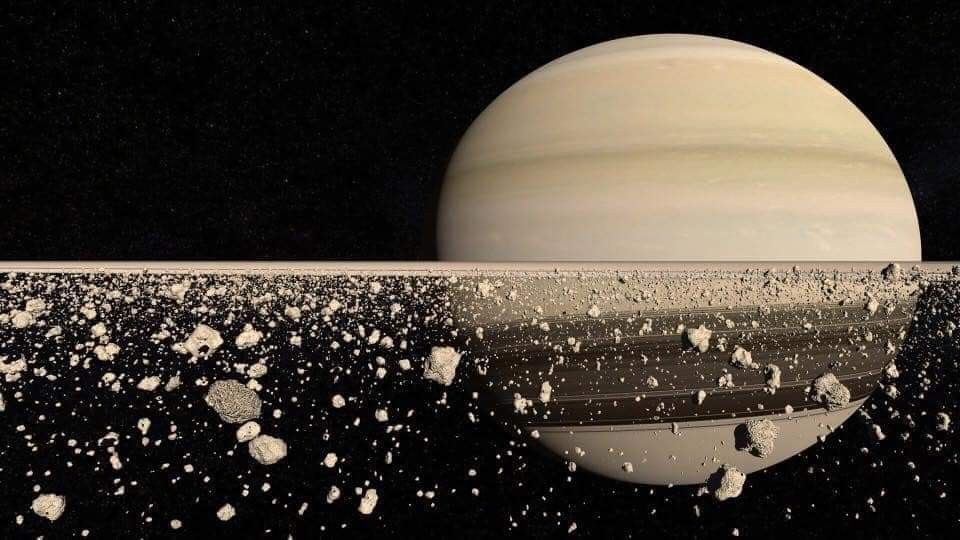
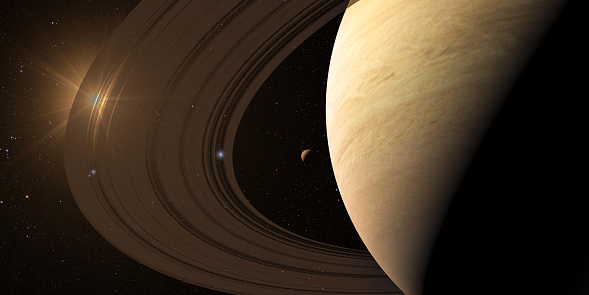
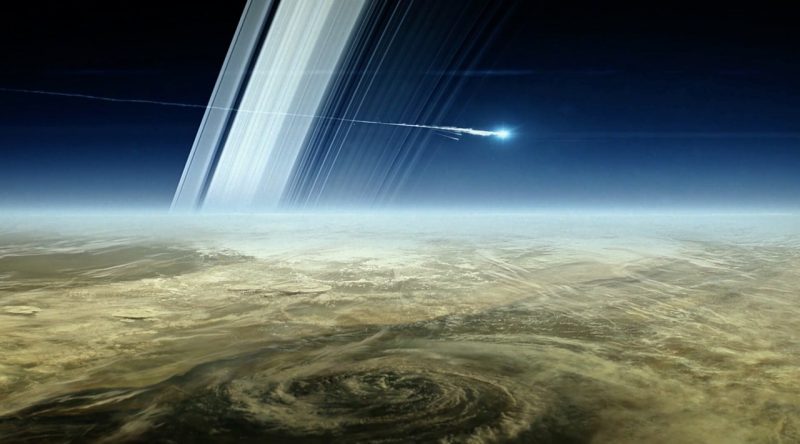
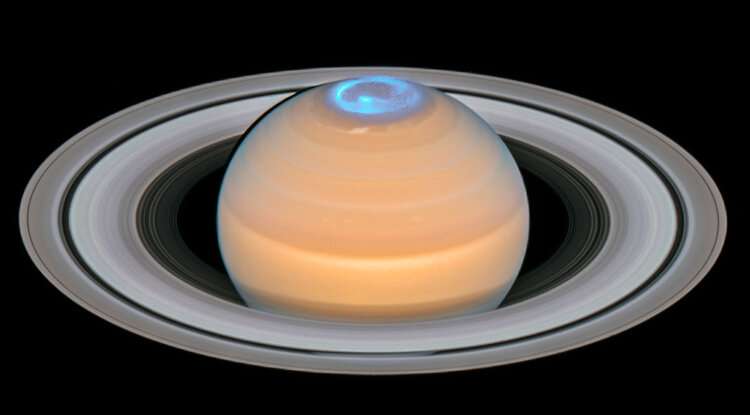
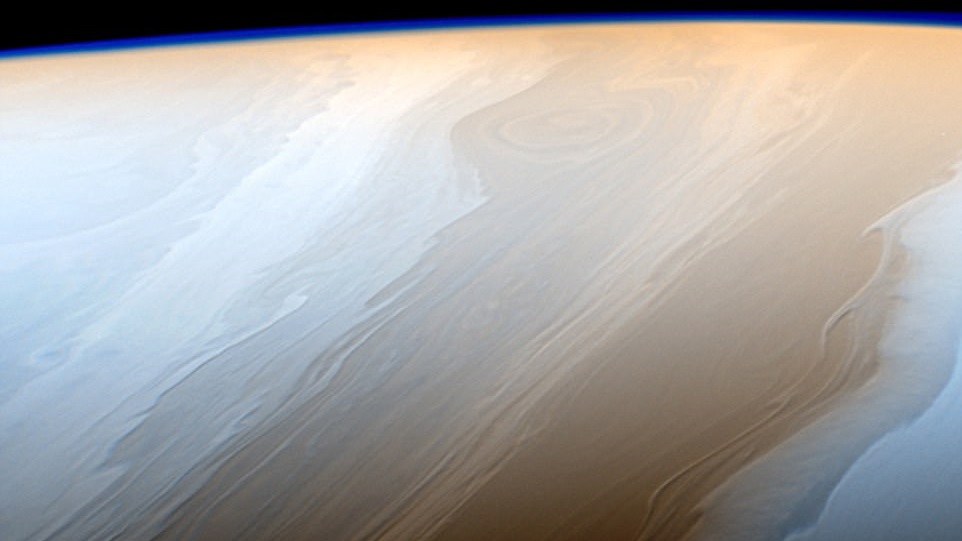
Saturn is the sixth planet in order of proximity to the Sun and the second largest in the Solar System, after Jupiter. It is classified as a gas or jovian giant. It is named in honor of the Roman god Saturnus, equivalent to the Greek god Chronos (the titanic father of Zeus). The planet Saturn is composed of hydrogen, with small proportions of helium and traces of other elements. The interior consists of a small core of rock and ice, surrounded by a thick layer of metallic hydrogen and an outer gaseous layer. The outer atmosphere has a generally uniform appearance, although some lasting details may appear. On Saturn, winds can reach speeds of 1,800 km/h, and are significantly faster than those on Jupiter. Saturn has a planetary magnetic field of intermediate intensity between that of Earth and Jupiter's most powerful. The most outstanding element of Saturn is its ring system, since although all the gaseous planets have one, Saturn's is especially striking. The rings were discovered by Christiaan Huygens in 1659 and were the only ones known until 1977. Saturn has about 60 satellites with diameters ranging from less than 1 km to 5,151 km from Titan, the second largest satellite in the Solar System.