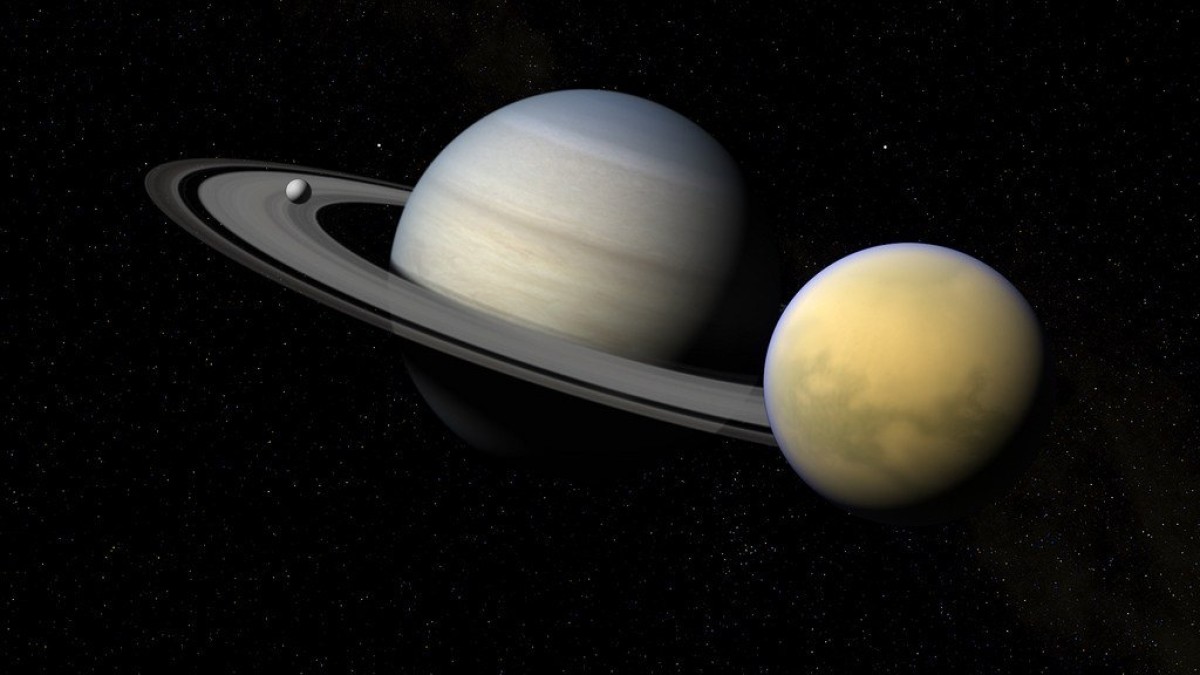
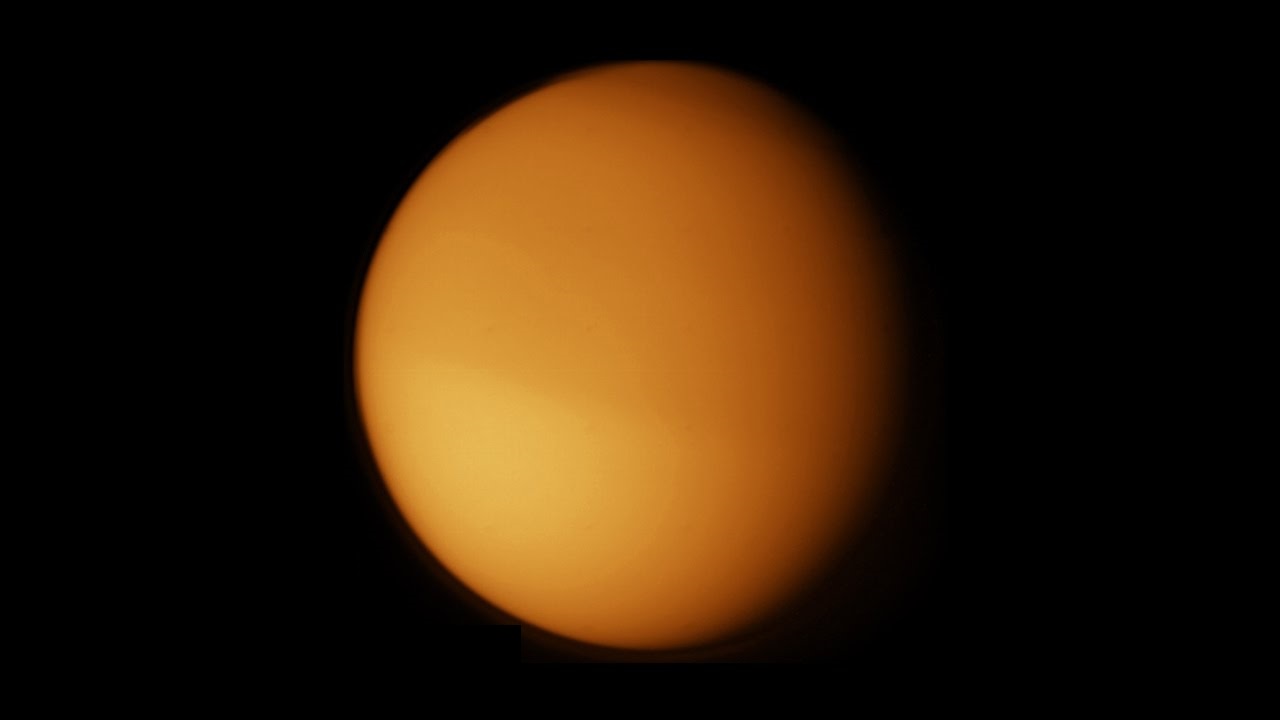
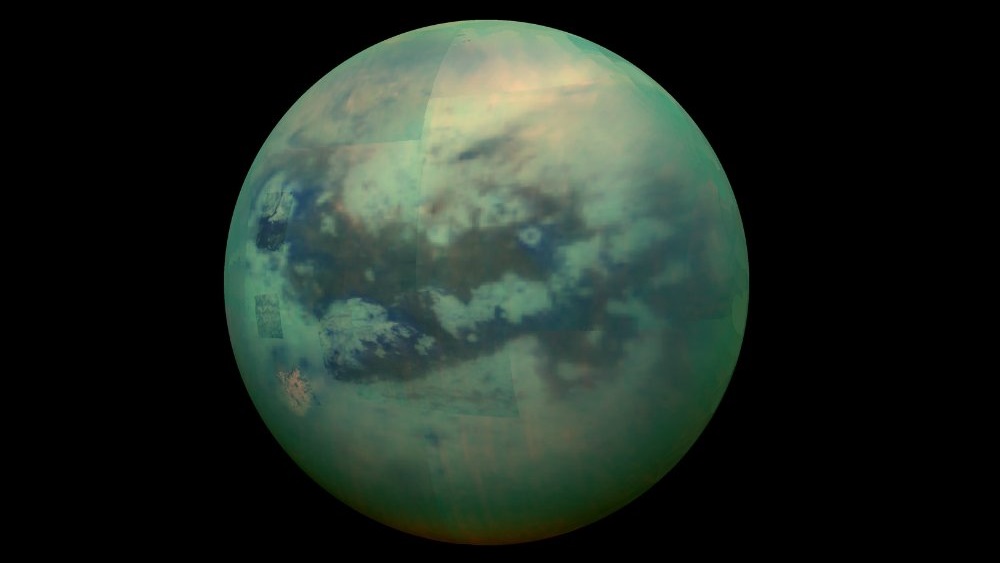
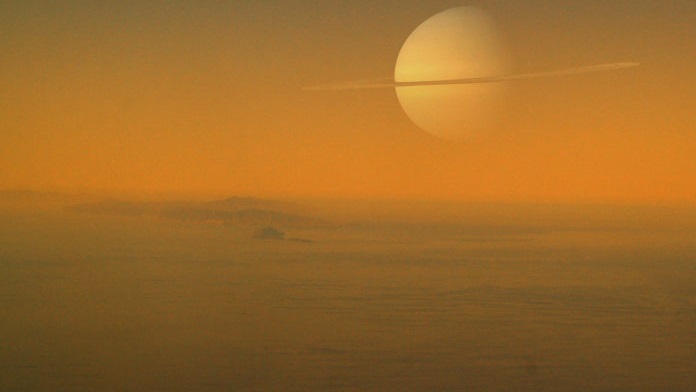
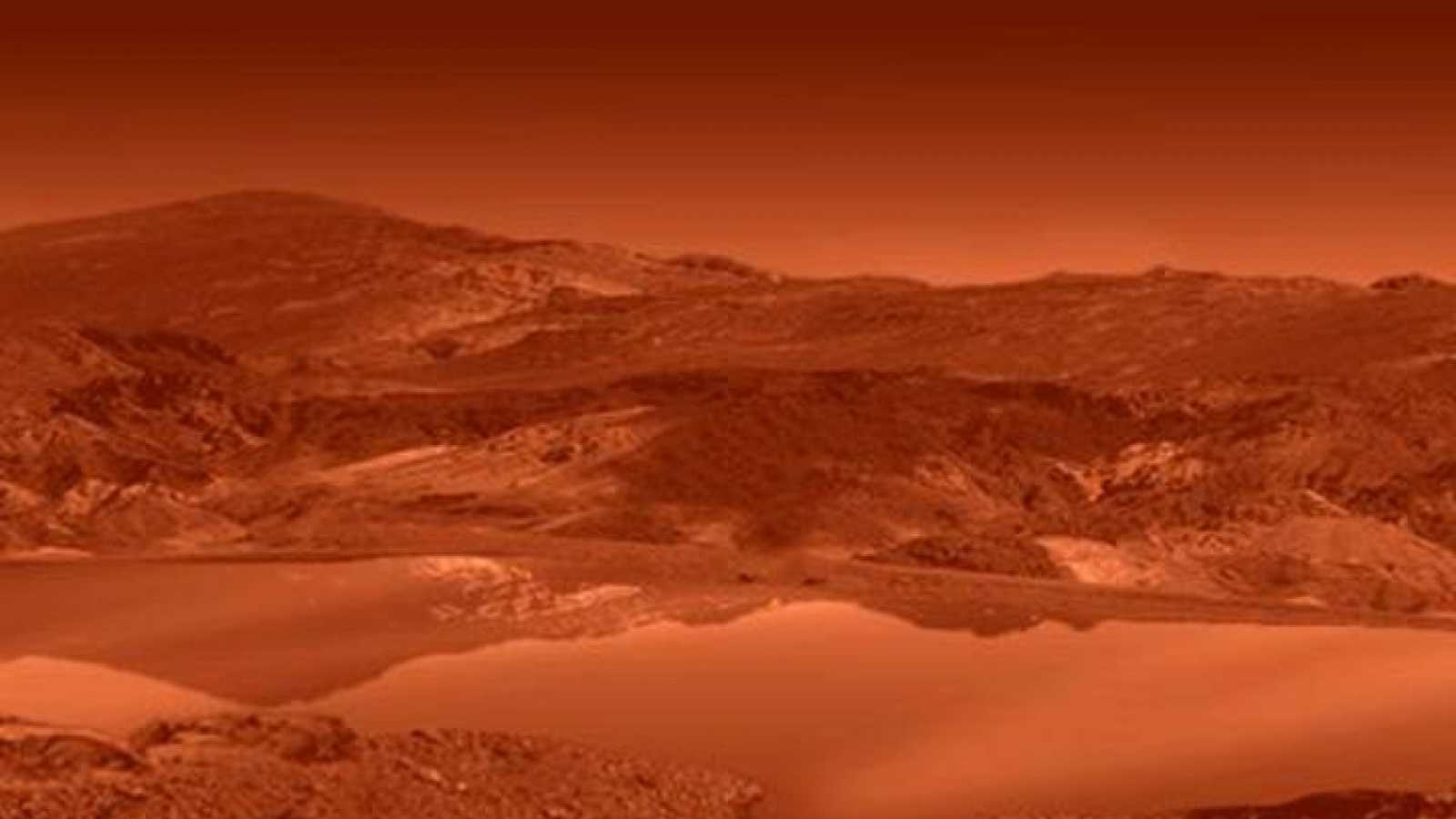
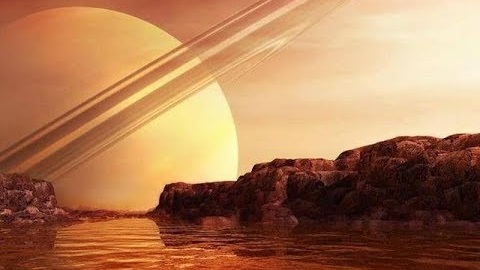
Titan is the largest of Saturn's satellites and the second largest in the Solar System after Ganymede. In addition, is the only known satellite that has an important atmosphere and the only object, apart from Earth, in which clear evidence of stable liquid bodies on the surface has been found. It is 50% larger in diameter than the Moon and 80% more massive than the Moon. It is larger in volume than the planet Mercury, although its mass represents 40% of the latter. It was discovered in 1655 by Christiaan Huygens and was Saturn's first known satellite, and the fifth known satellite from another planet. It is mainly composed of ice and rocky material and its geologically young surface includes mountains, cryovolcanoes, some impact craters and liquid hydrocarbon lakes in the polar regions.