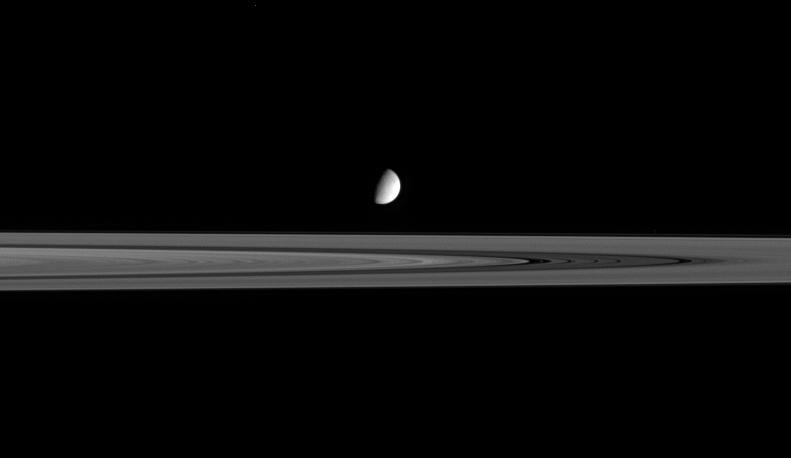
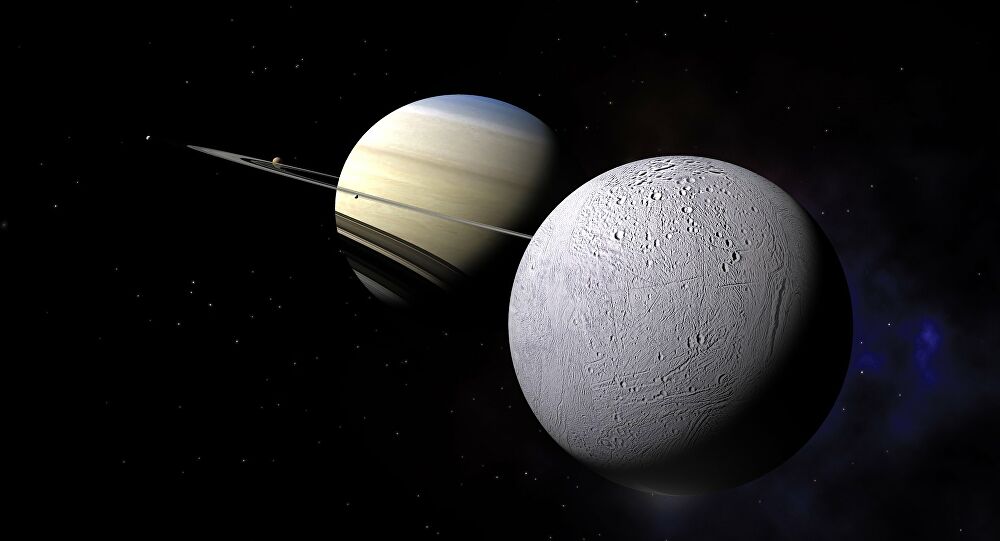
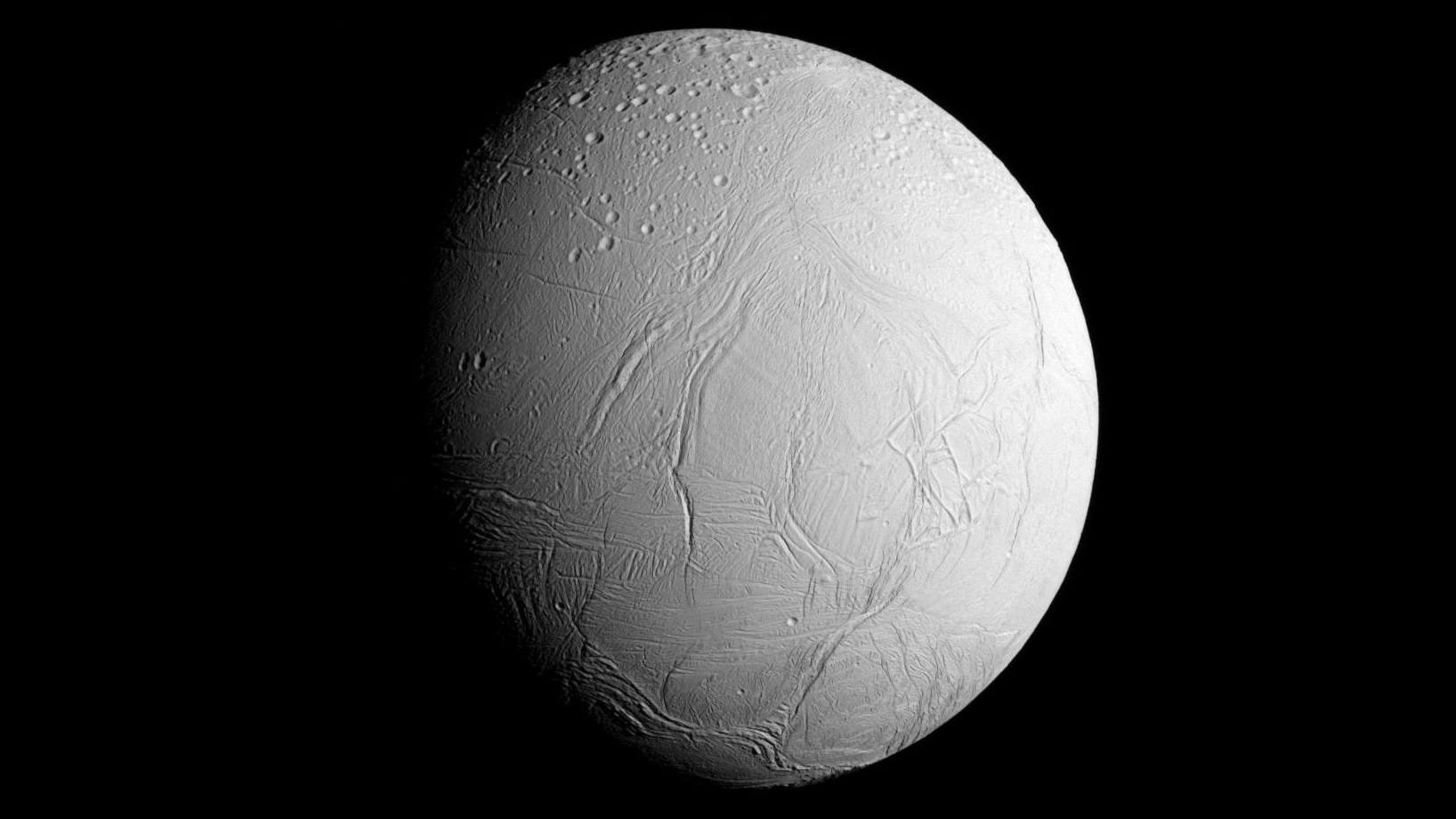
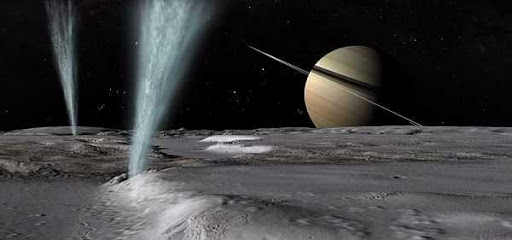
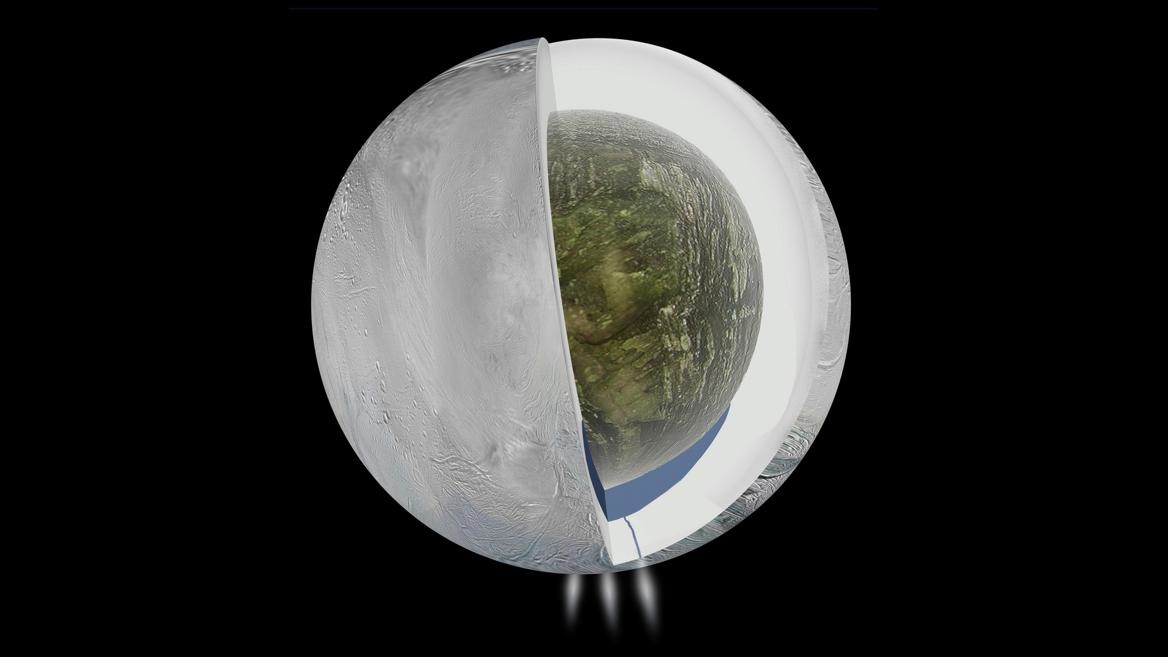
Enceladus is Saturn's sixth largest satellite, about 500 km in diameter, about a tenth that of Titan, Saturn's largest satellite. It is covered by a fresh, clean layer of ice that reflects almost all the sunlight that falls on it, so the surface temperature only reaches –198º C at noon. Despite its small size, it has a wide variety of surface features ranging from ancient, crater regions to young, tectonically deformed terrain that formed just a hundred million years ago. Discovered in 1789 by William Herschel, since it has water, even in the form of ice, it is considered that suitable conditions for life could exist, even in extreme form.