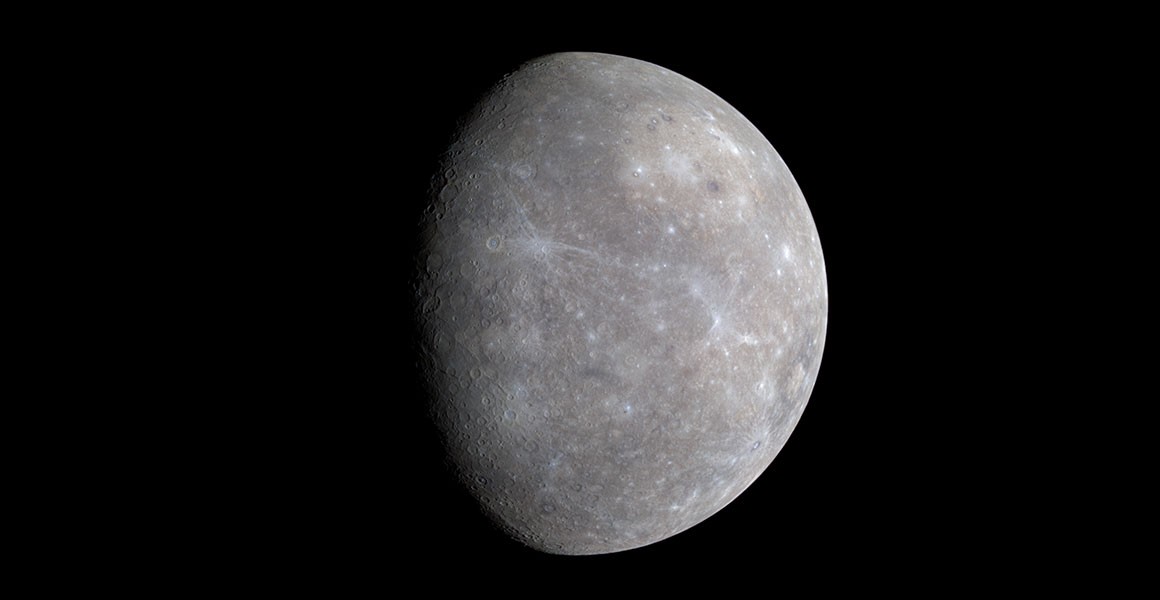
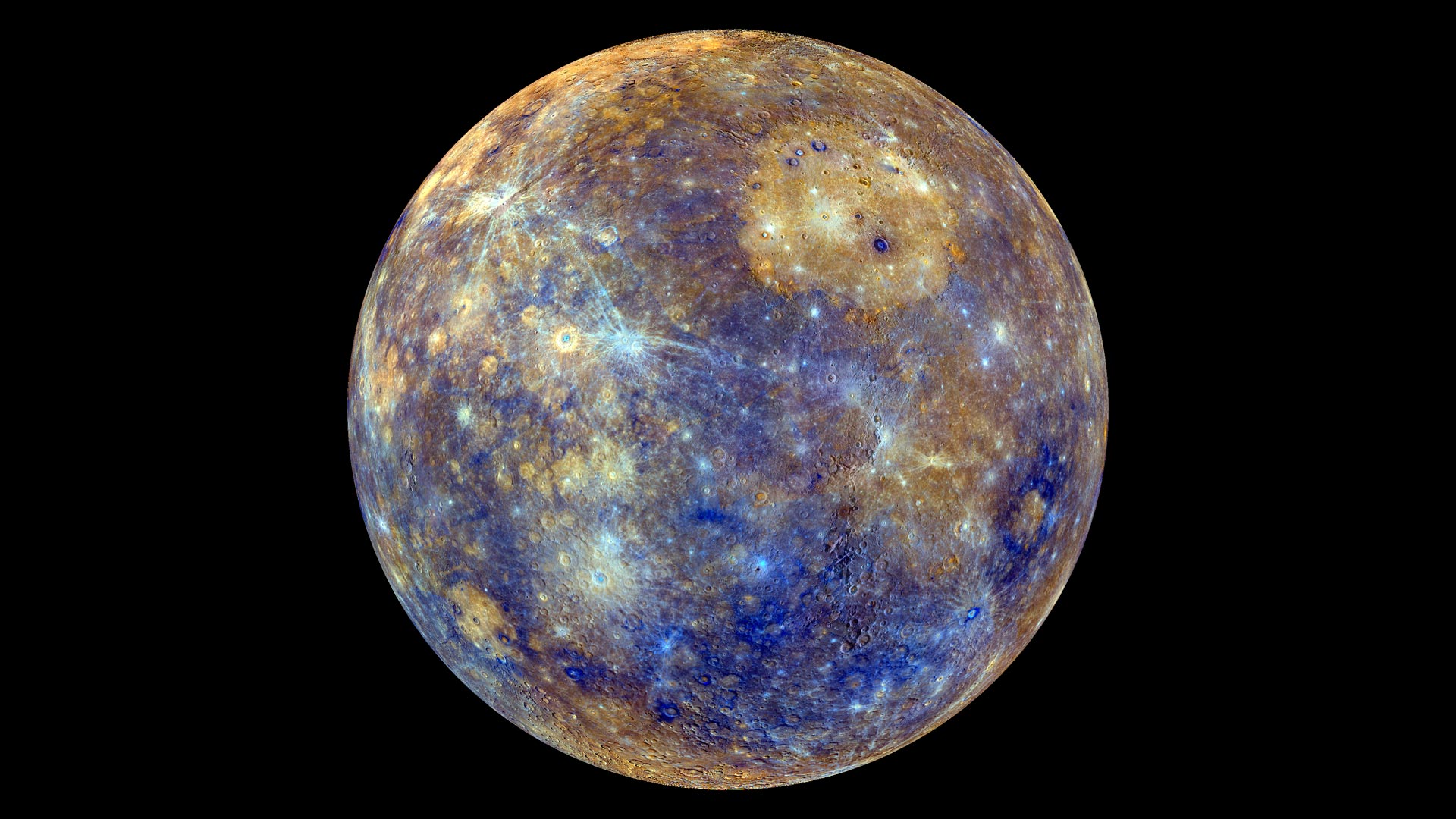
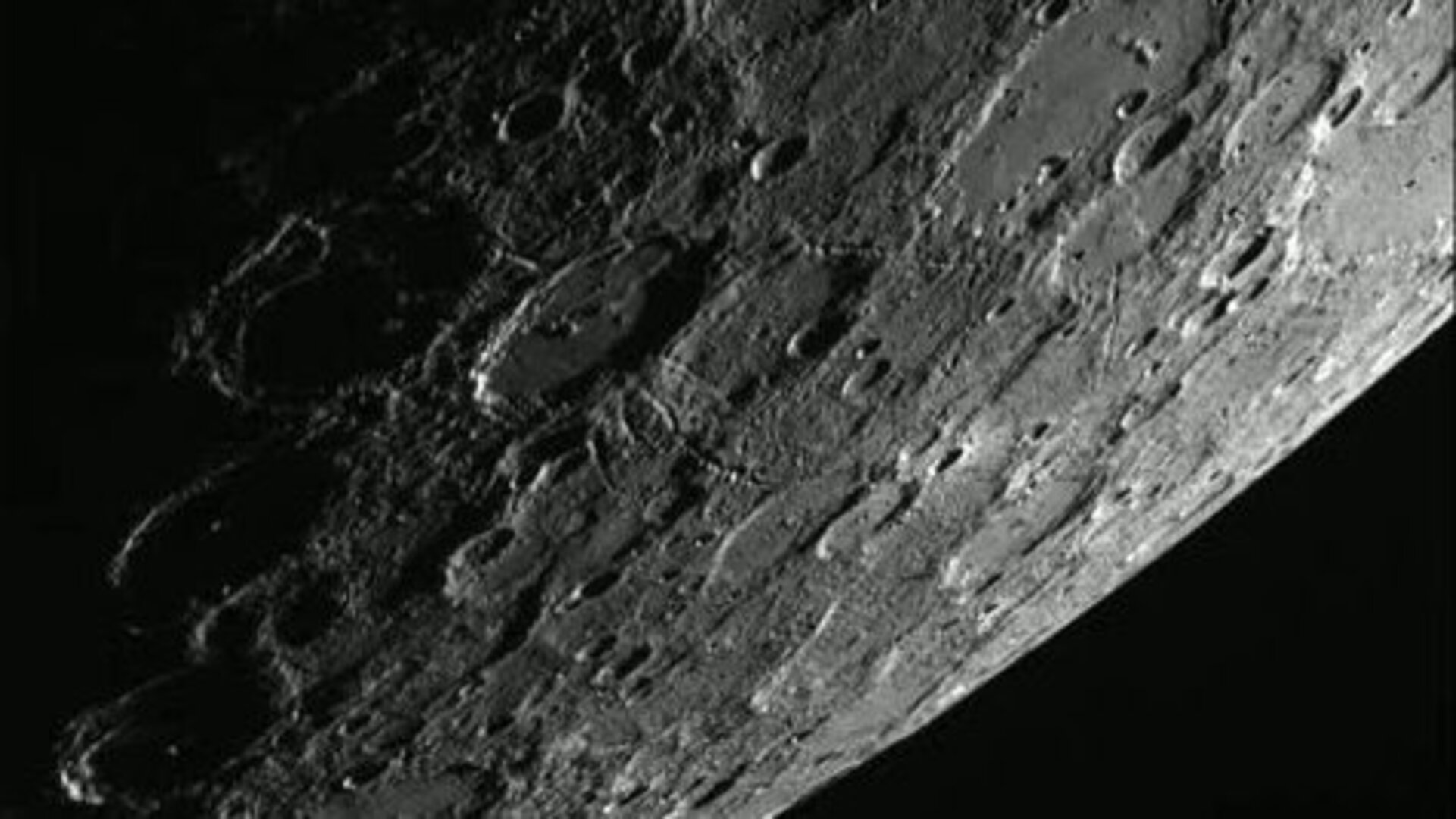
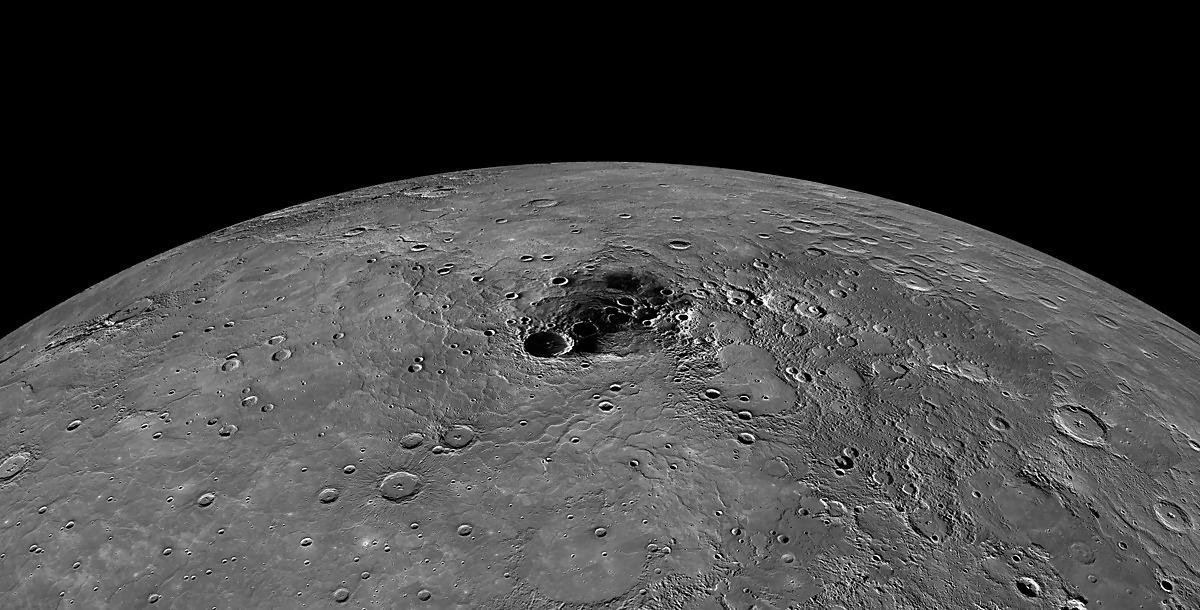
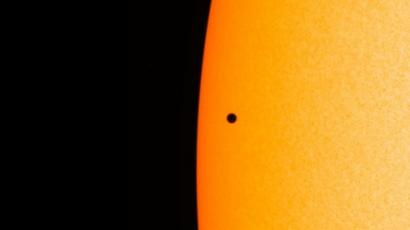
Mercury is the closest planet to the Sun and the smallest in the Solar System. It goes around the Sun every 88 days. Mercury is bright when viewed from Earth, with an apparent magnitude of -2.0 to 5.5, but it is not easily seen, since its maximum angular separation from the Sun is only 28.3 °. You can only see it while the sunrise and the twilight. Being a planet whose orbit is internal to that of Earth, we observe it periodically pass in front of the Sun, a phenomenon called «astronomical transit». Observations of its orbit over many years showed that the perihelion rotates 43" of arc more per Century than predicted by Newton's classical mechanics. This discrepancy led a French astronomer, Urbain Le Verrier, to believe that a planet still existed. closer to the Sun, which he called Vulcan, which disturbed Mercury's orbit. Now it is known that Vulcan does not exist, the correct explanation of the behavior of Mercury's perihelion is found in the general theory of relativity.