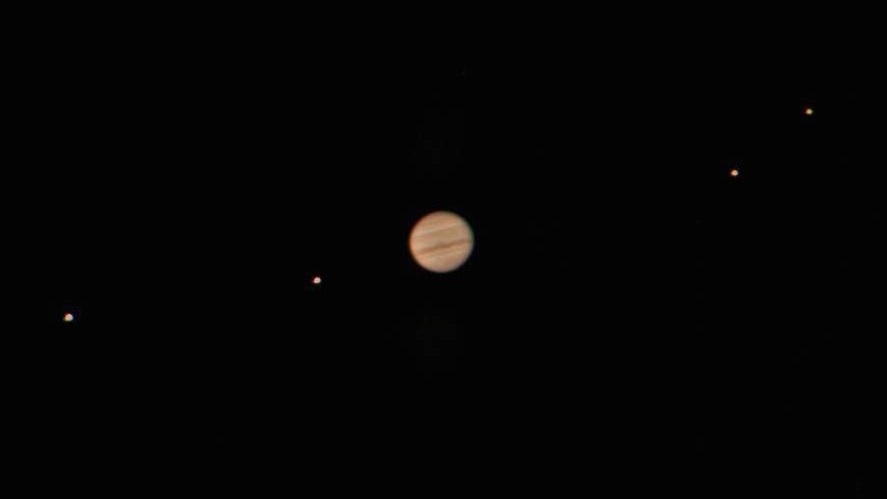
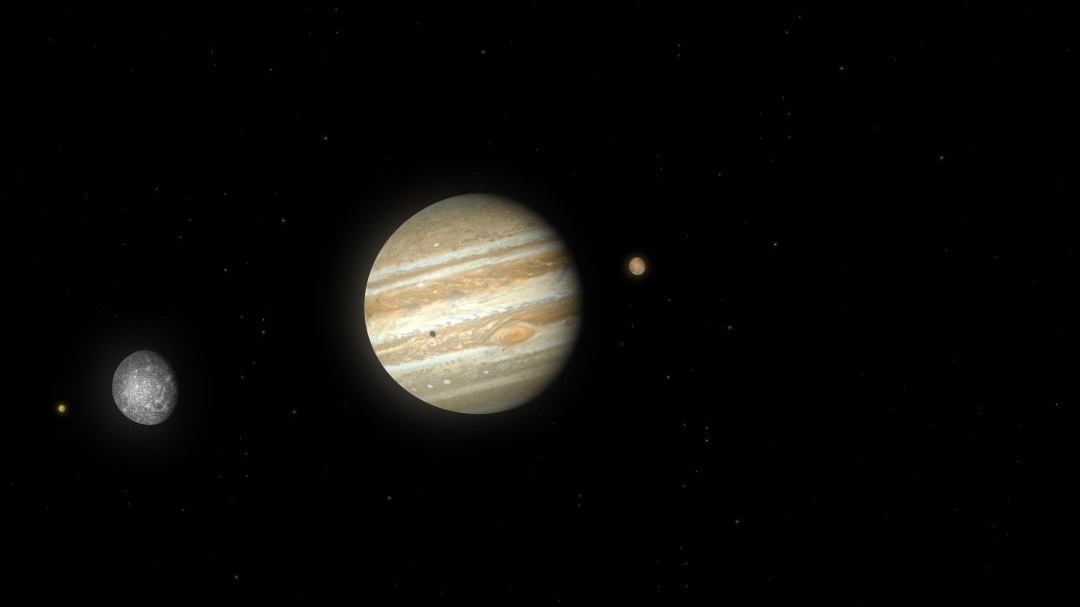
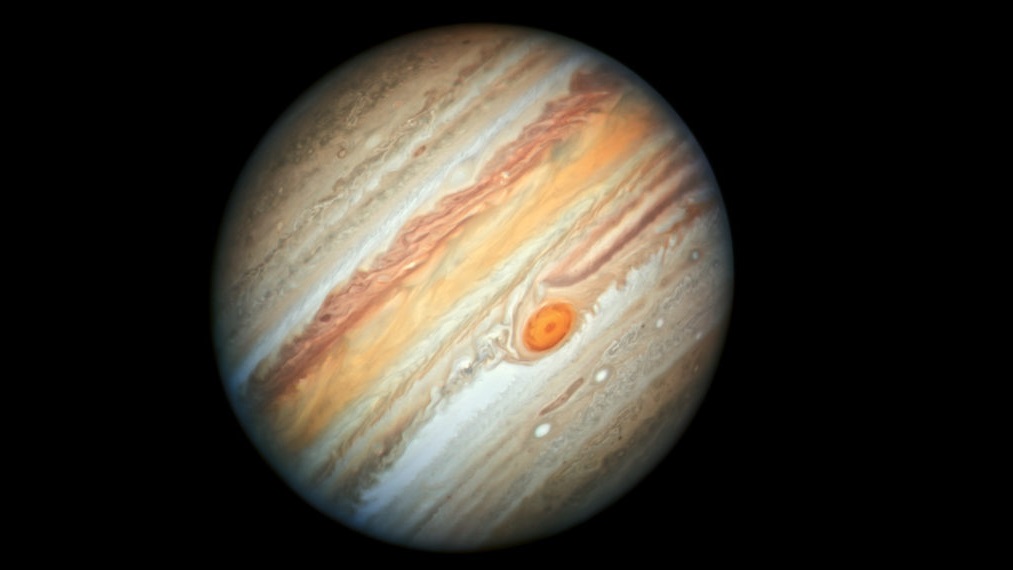
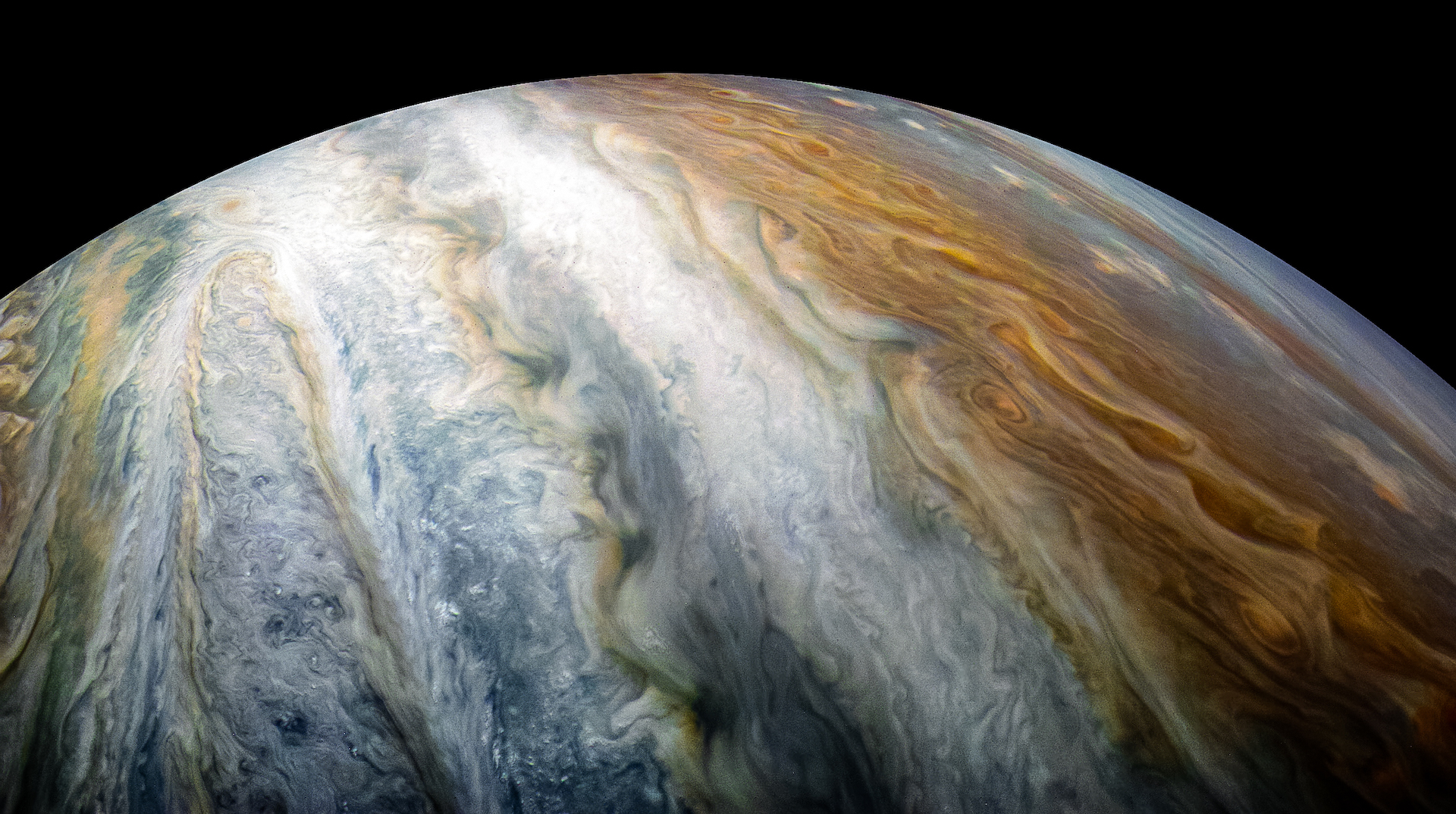
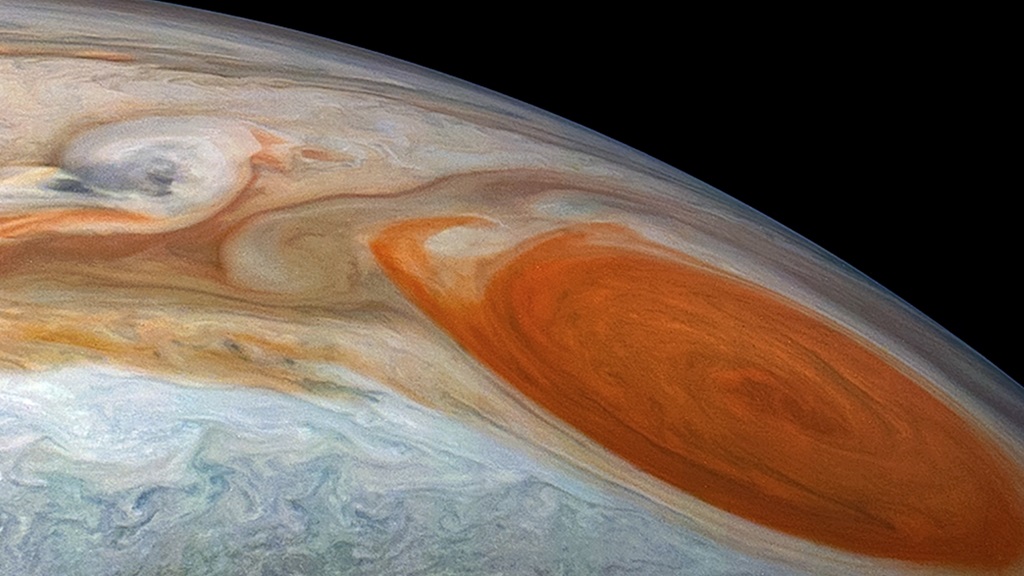
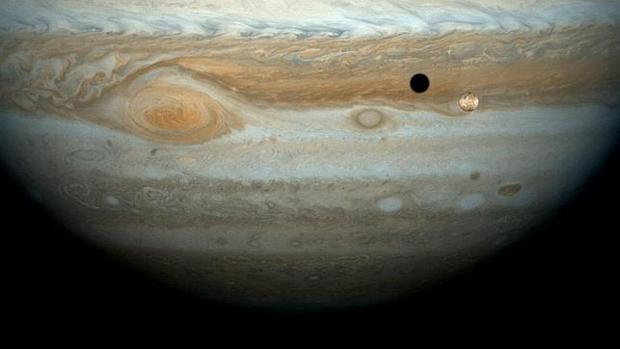
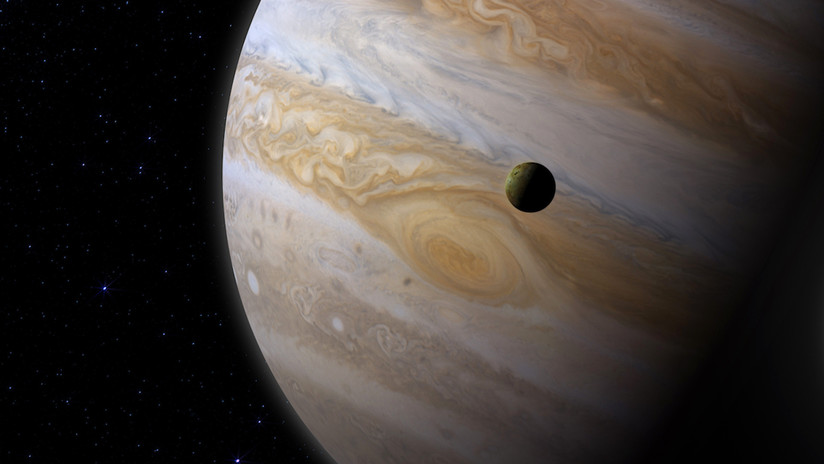
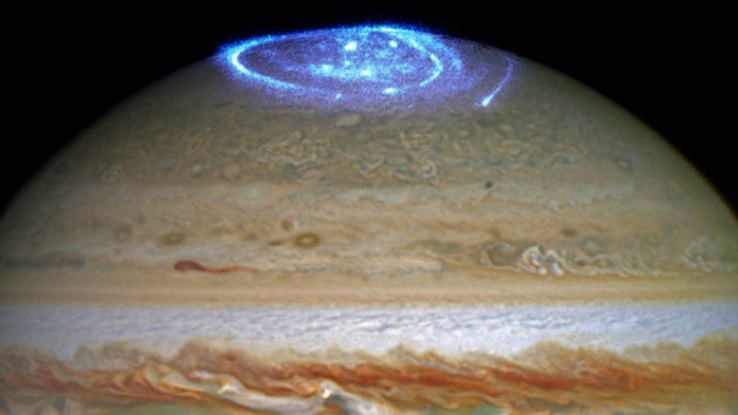
Jupiter is the largest planet in the Solar System and the fifth in distance from the Sun. It has a diameter of 142,984 km (about 11 times that of Earth). Its orbit is located approximately 5.2 astronomical units (about 778 million km) from the Sun, between the orbits of Mars and Saturn. It is a gas giant consisting mainly of hydrogen and helium without a defined interior surface. Its most notable feature is the Great Red Spot, a huge anticyclone located in the tropical latitudes of the southern hemisphere. Jupiter has been known since ancient times and is named after the father of the gods of Roman mythology, the one the Greeks called Zeus. Jupiter has about 80 satellites with diameters ranging from 1 km to 5,262 km of Ganymede, the largest satellite in the Solar System. This was discovered by Galileo Galilei together with Io, Europa, and Callisto in 1610. The 4 satellites are together called «Galilean satellites».