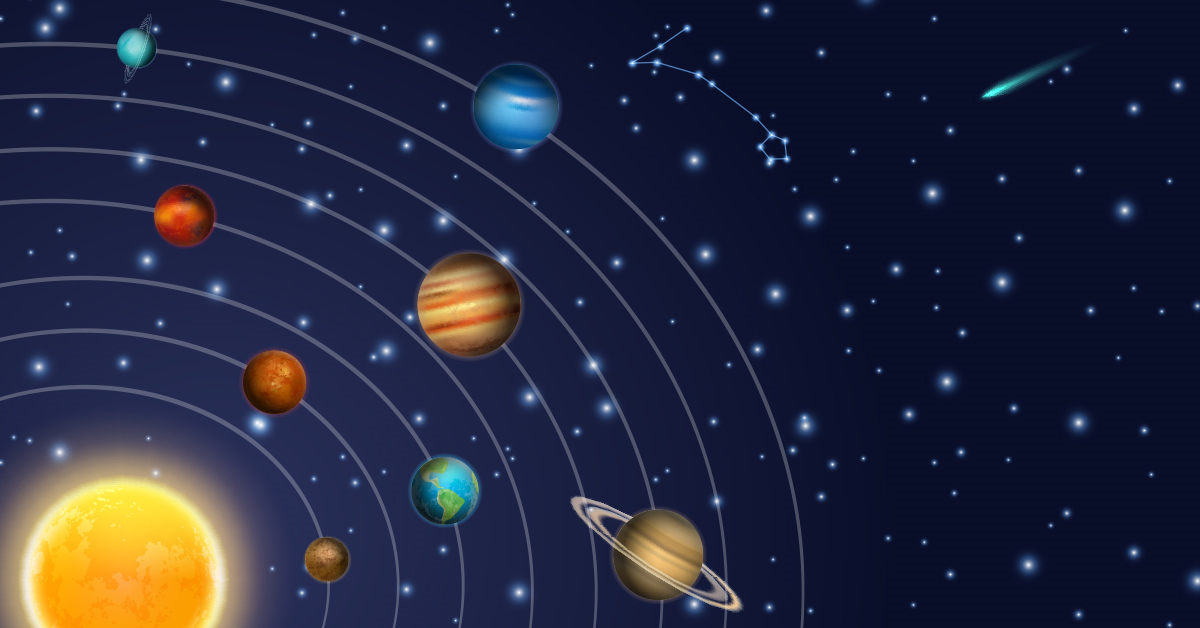
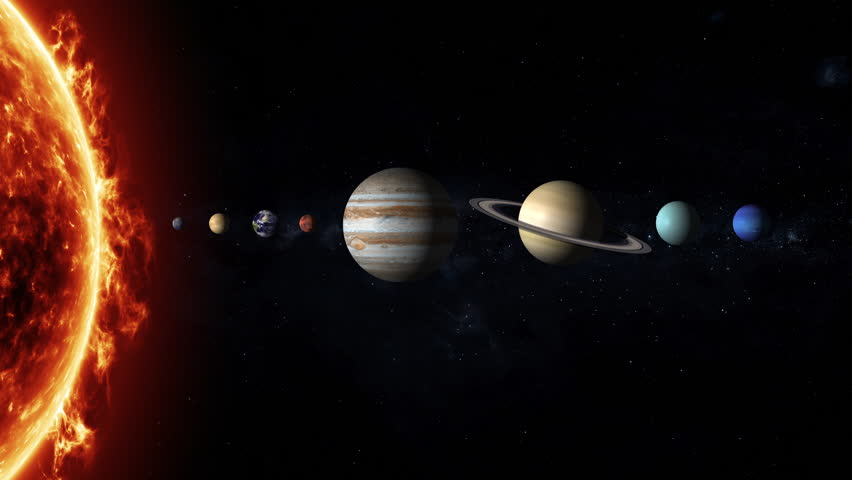
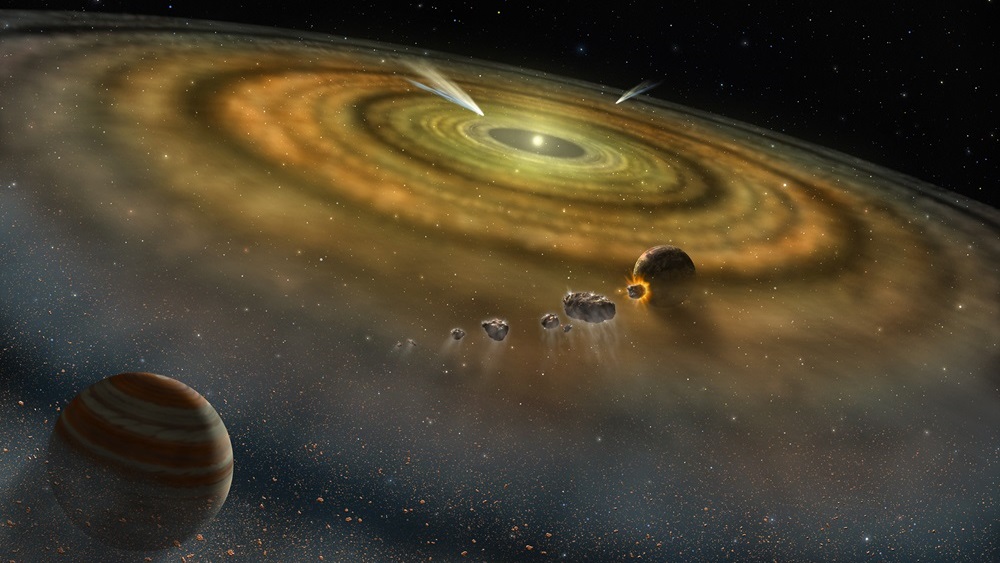
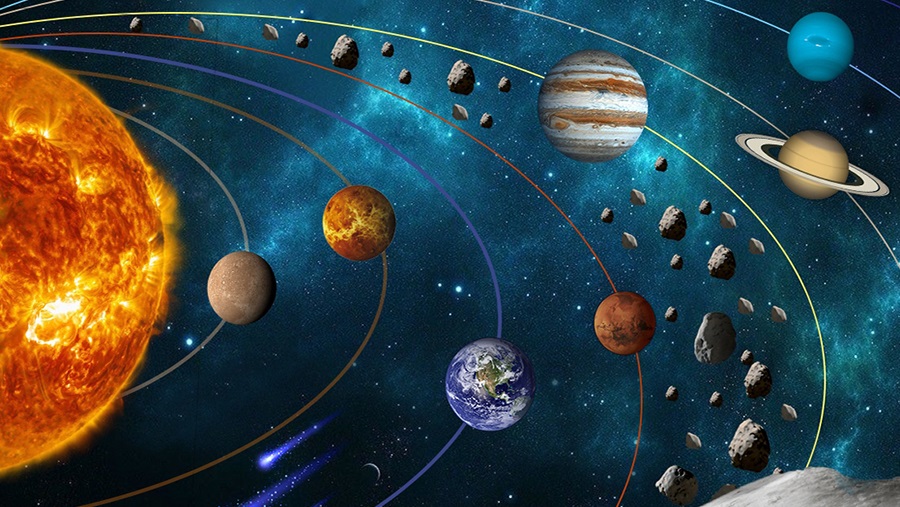
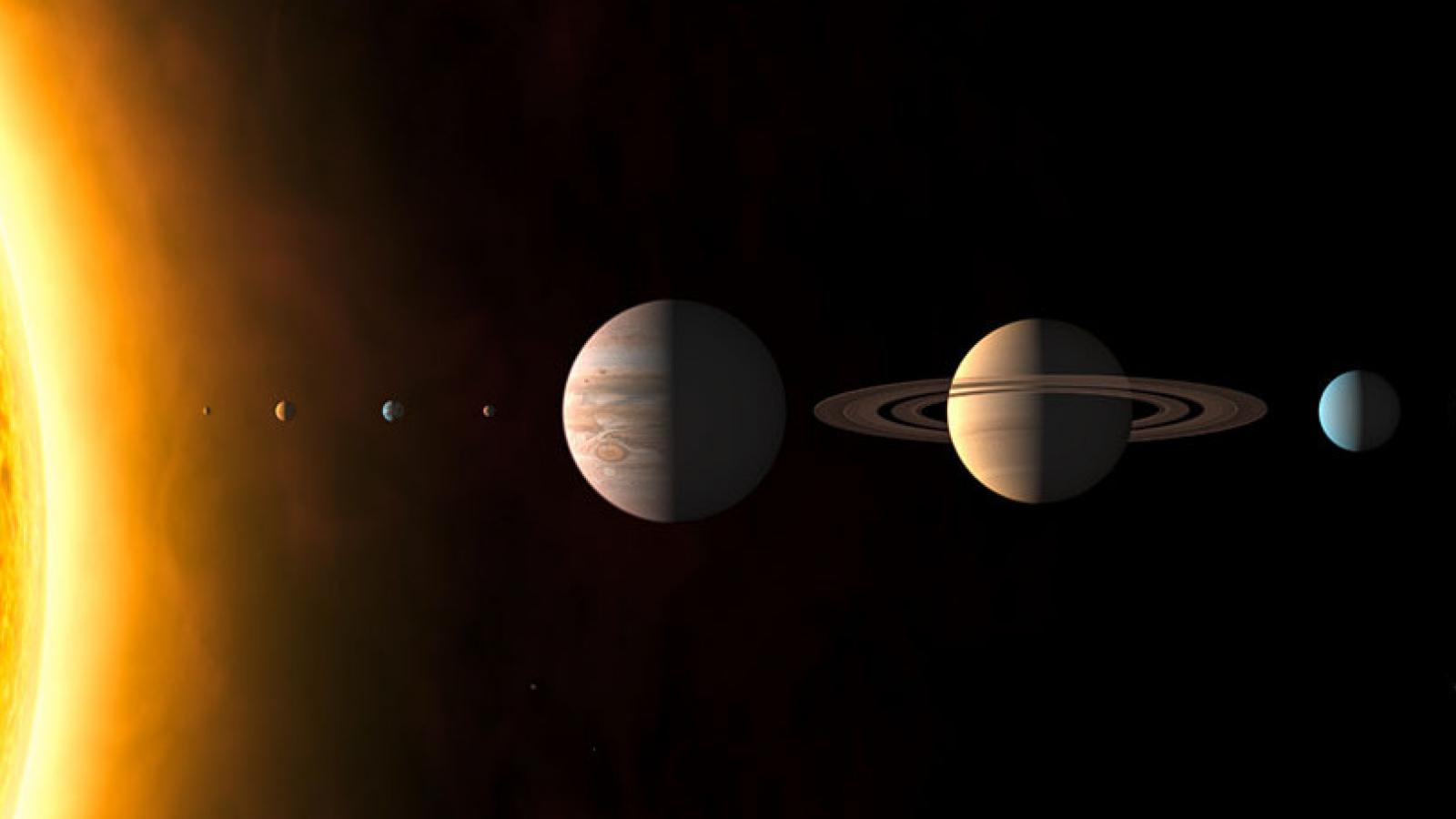
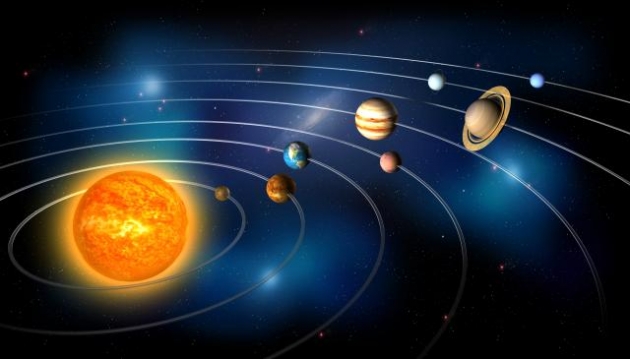
The Solar System is the planetary system where the Earth and other astronomical objects are found that rotate directly or indirectly in an orbit around a single star known as the Sun. The Sun concentrates 99.75% of the mass of the Solar System and most of the remaining mass is concentrated on eight planets whose orbits are practically circular and transit within an almost flat disc called «ecliptic». Other objects that also make up the Solar System are the dwarf planets, the small bodies, the satellites, the comets and the cosmic dust. The Solar System is divided into several parts:
- 1. The Inner Solar System , which contains the planets and is subdivided by the Asteroids Belt:
1.a. Terrestrial planets , closest to the Sun, with Earth as its main representative. It ranges from the Sun to a distance of 1.5 AU.
1 B. The Asteroid Belt . It extends between the orbits of Mars (1.5 AU) and Jupiter (5.2 AU).
1 C. The gaseous planets , the farthest from the Sun, with Jupiter as its maximum exponent. It goes from Jupiter's orbit (5.2 AU) to that of Neptune (30 AU).
- 2. The outer Solar System , located beyond Neptune, formed by transneptunian objects.
2.a. The Kuiper Belt . It is an area in which there is a relatively abundant number of celestial bodies, ranging from Neptune's orbit (30 AU) to about 55 AU.
2.a. The Scattered Disc . It is an area with a low density of objects that reaches a distance of approximately 460 AU from the Sun.
2.a. The Oort Cloud , which is considered the origin of comets. It is believed to have billions of objects and ranges from 1,000 to 20,000 AU.
Apart from these items, the trojans and centaurs should also be considered.