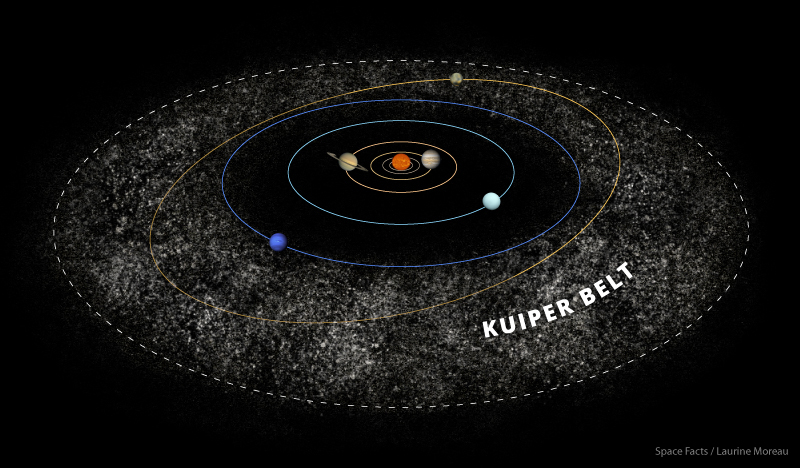
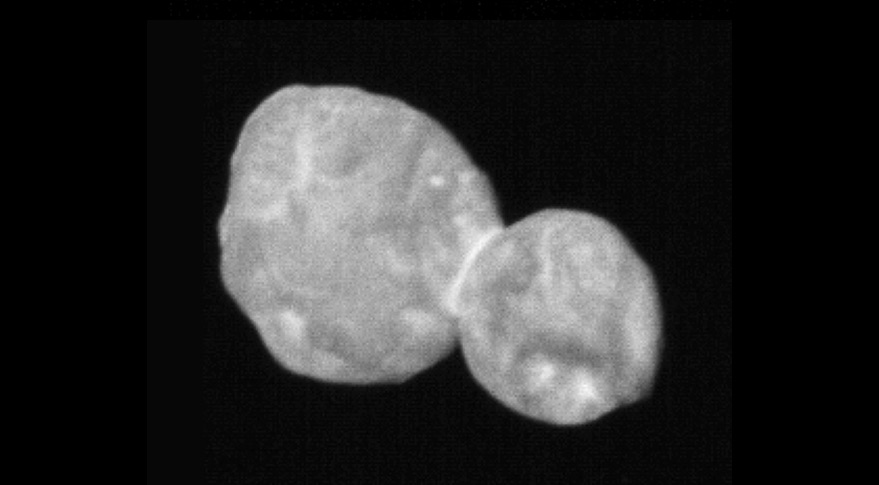
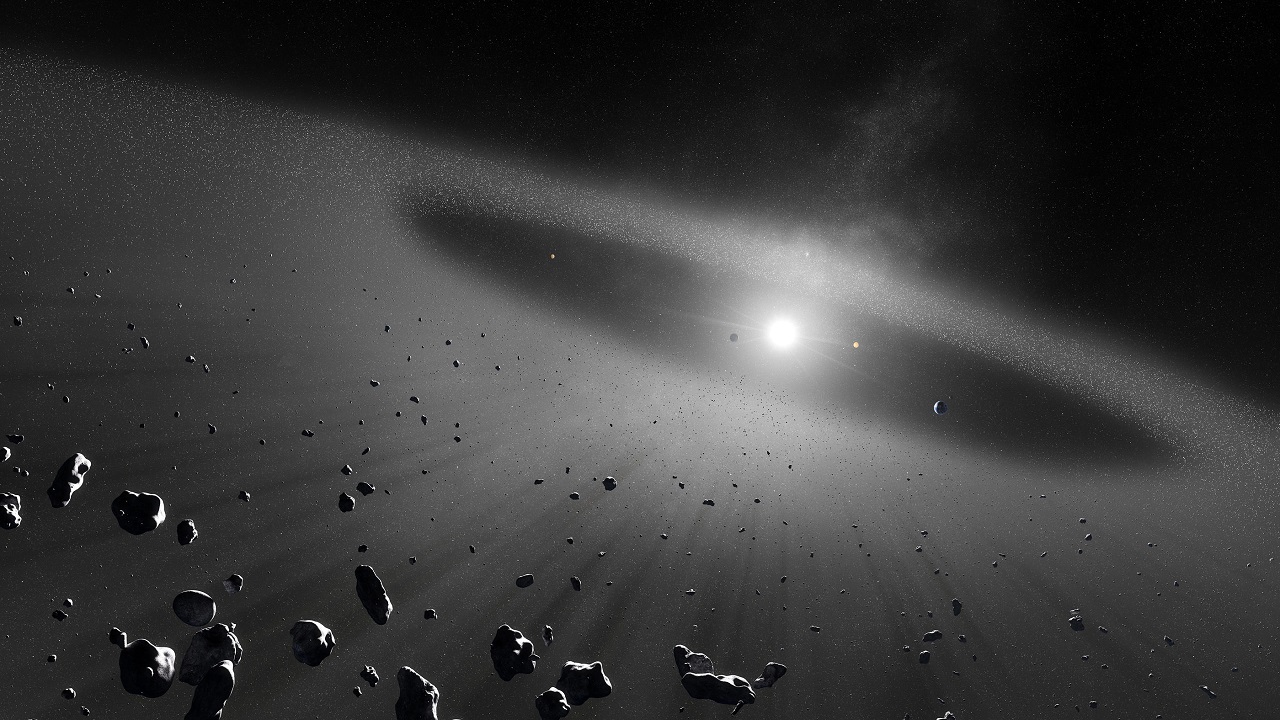
The Kuiper Belt is a circumstellar disk of the Solar System that orbits around the Sun at a distance of between 30 and 55 AU (beyond the orbit of Neptune). It receives its name in honor of Gerard Kuiper, who predicted its existence in 1951. They belong to the group of the so-called Transneptunian Objects (TNO). Most of the objects discovered so far have sizes between 100 and 1000 km in diameter. This belt is believed to be the source of short-period comets. The first Kuiper Belt object to be discovered was Pluto in 1930, although it was then considered a planet, as it was initially considered to be similar in size to Earth and was the only object in that area. Knowledge of its actual size (2370 km) and the appearance of other similar bodies in the Kuiper Belt from de 90's, led the International Astronomical Union to requalify it as dwarf planet. Belt objects are characterized by their eccentric and inclined orbits relative to the ecliptic. Most of its objects are in orbital resonance with Neptune in a 1:2 ratio (the so-called twotinos) and in a 2:3 ratio (the so-called plutinos, with Pluto as the model).Among the objects of the belt, various dwarf planets should be highlighted, such as the aforementioned Pluto, Makemake, Haumea, etc.