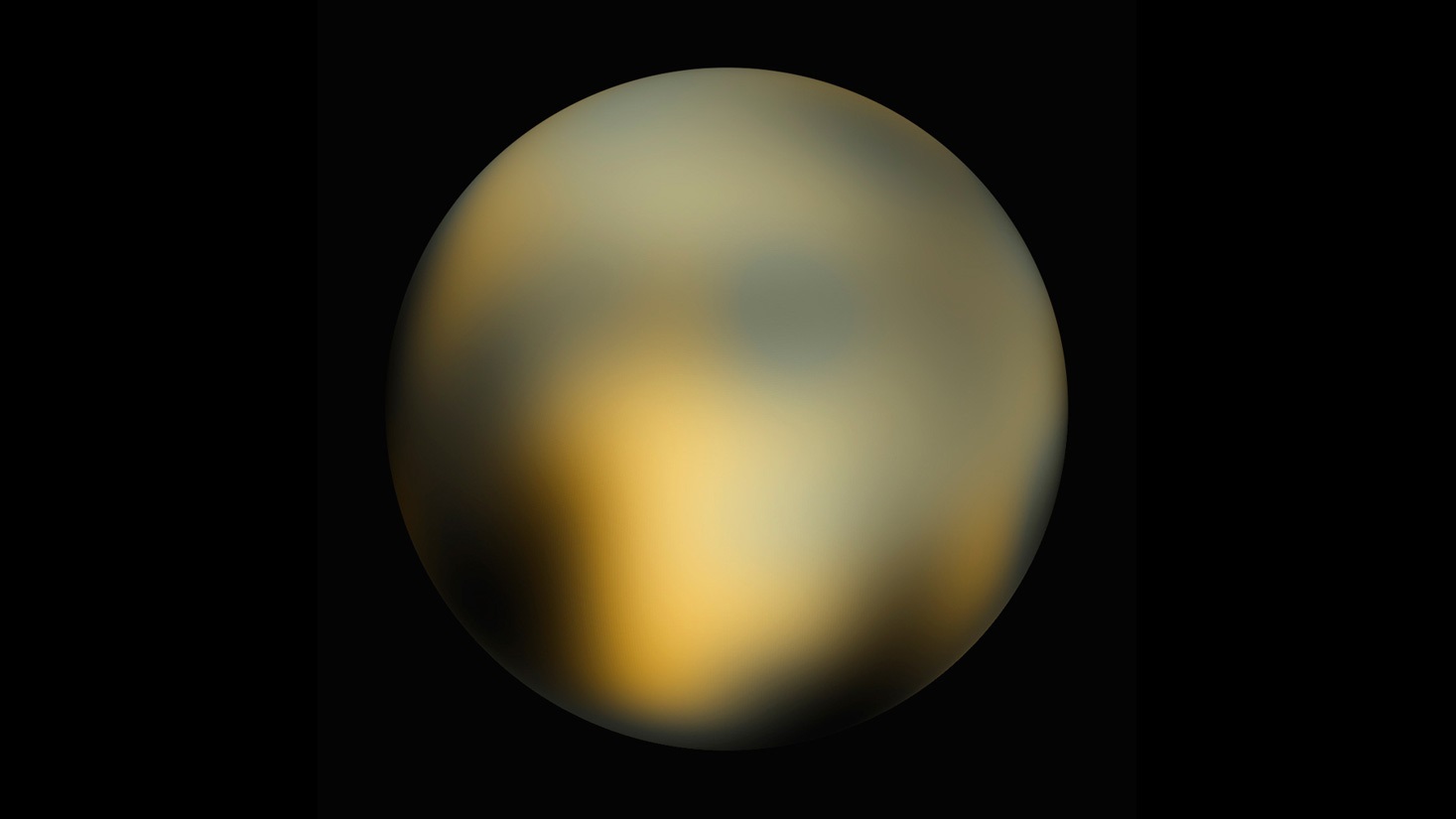
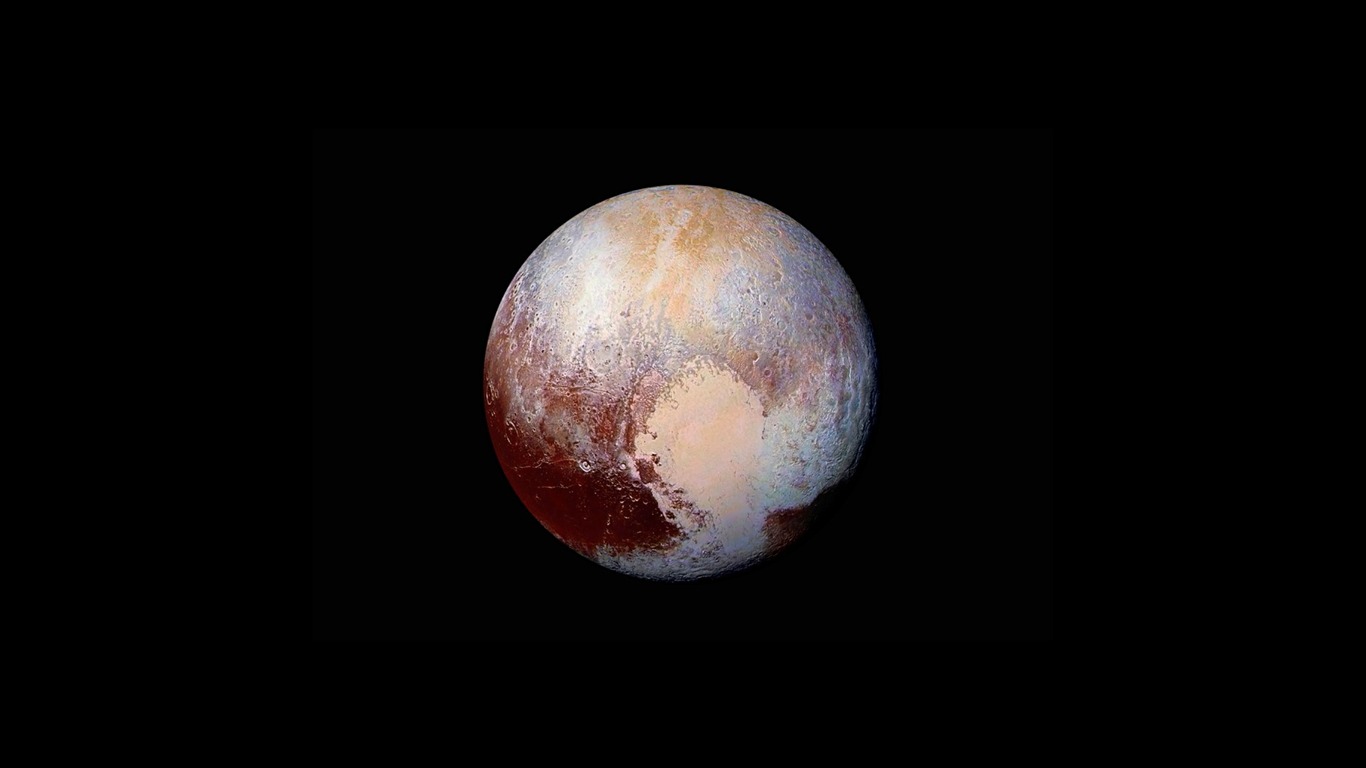
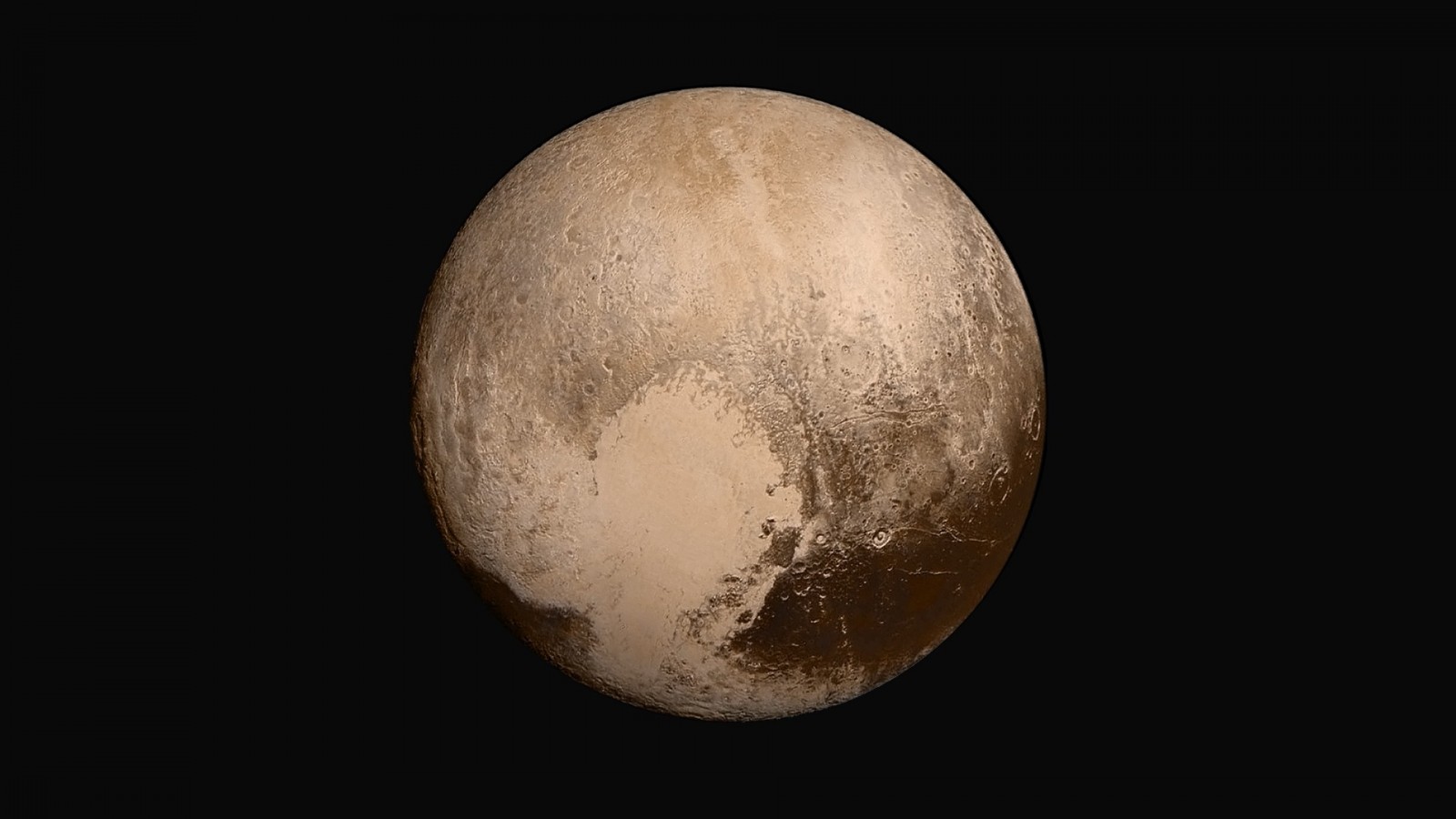
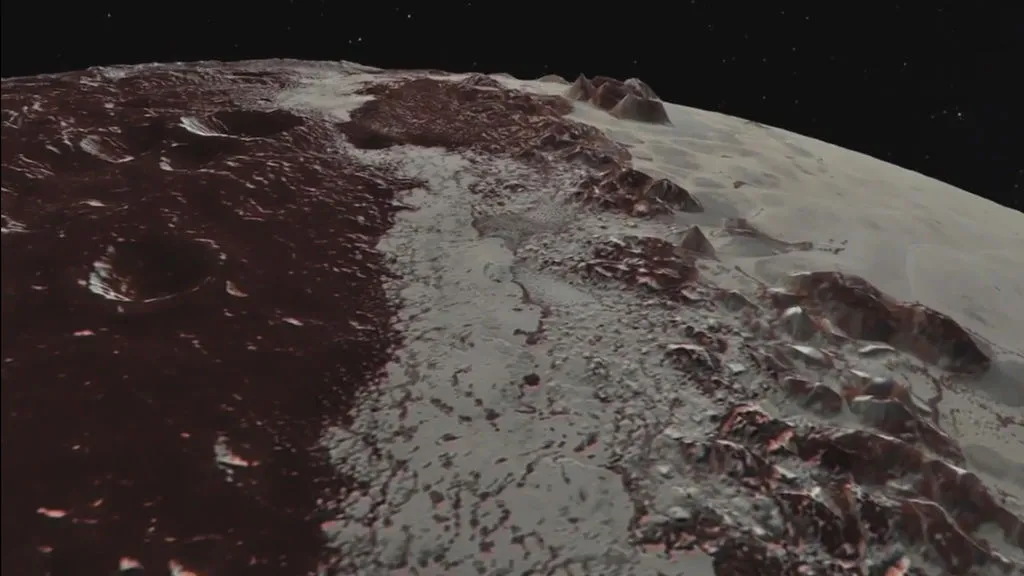
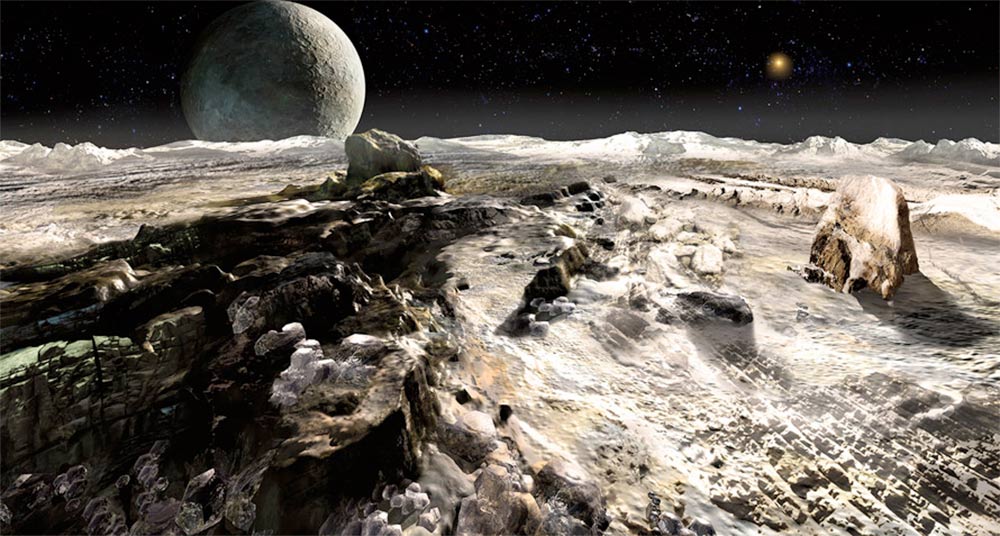
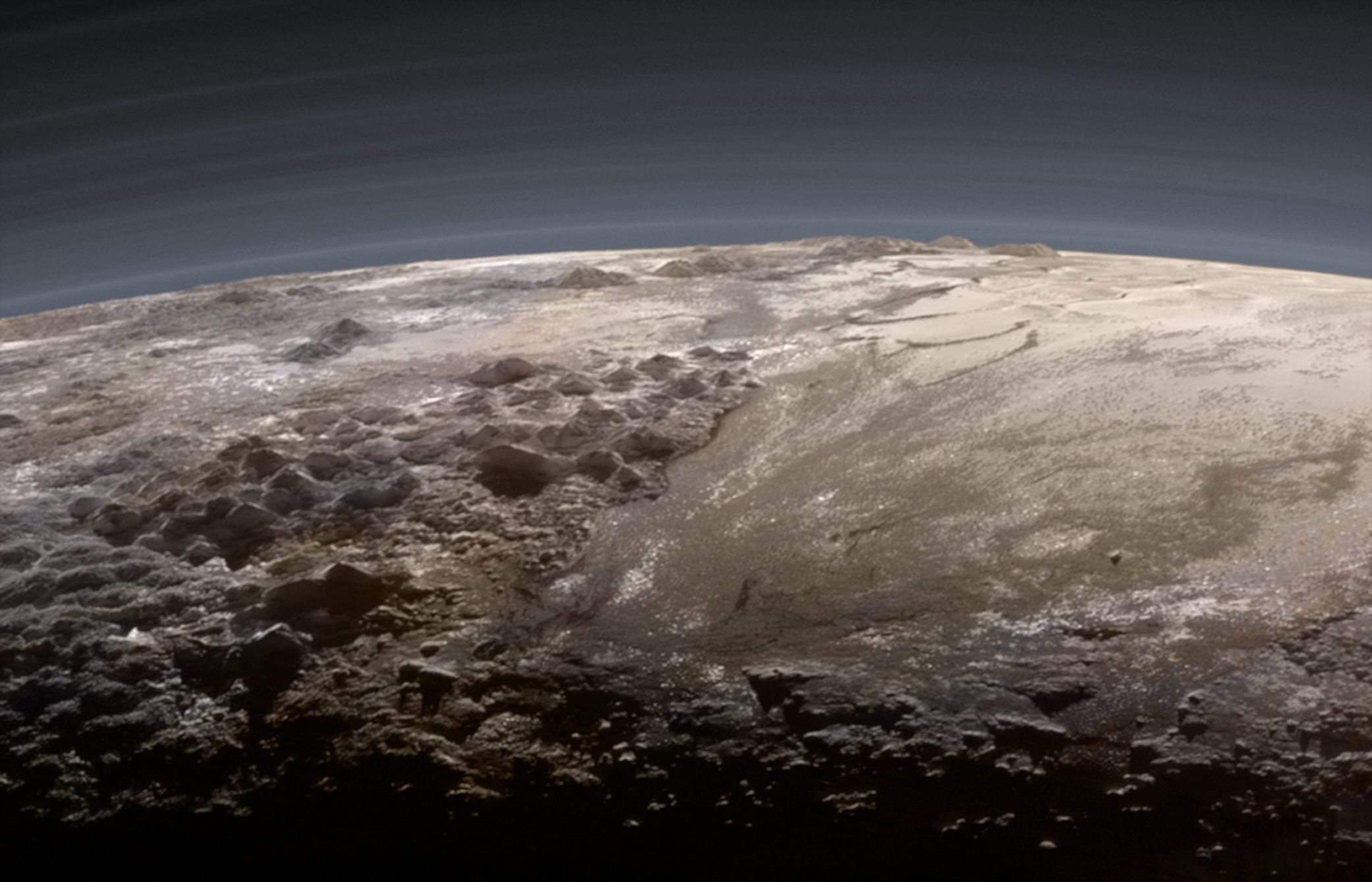
Pluto, designated (134340) Pluto, is a dwarf planet in the Solar System located beyond Neptune's orbit. Its name is due to the Roman mythological god Pluto (Hades according to Greek mythology). Considered a planet since its discovery by Clyde Tombaugh in 1930, in 2006 the International Astronomical Union decided to create a new category, the dwarf planets, in which it included Pluto, ceasing to be considered one of the main planets. Furthermore, it is the prototype of a category of transneptunian objects called plutinos. Pluto has an eccentric orbit highly inclined with respect to the ecliptic, which runs closer in its perihelion to the interior of Neptune's orbit. It also has five satellites: Charon, Nix, Hidra, Cerbero and Estigia, 3 which are celestial bodies that share the same category. Its great distance from the Sun and Earth, together with its small size, prevents it from shining above magnitude 13.8 at its best moments (orbital perihelion and opposition).