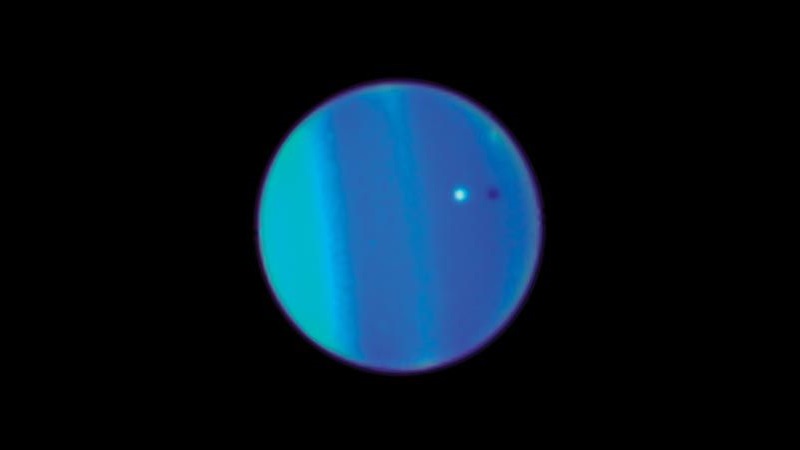
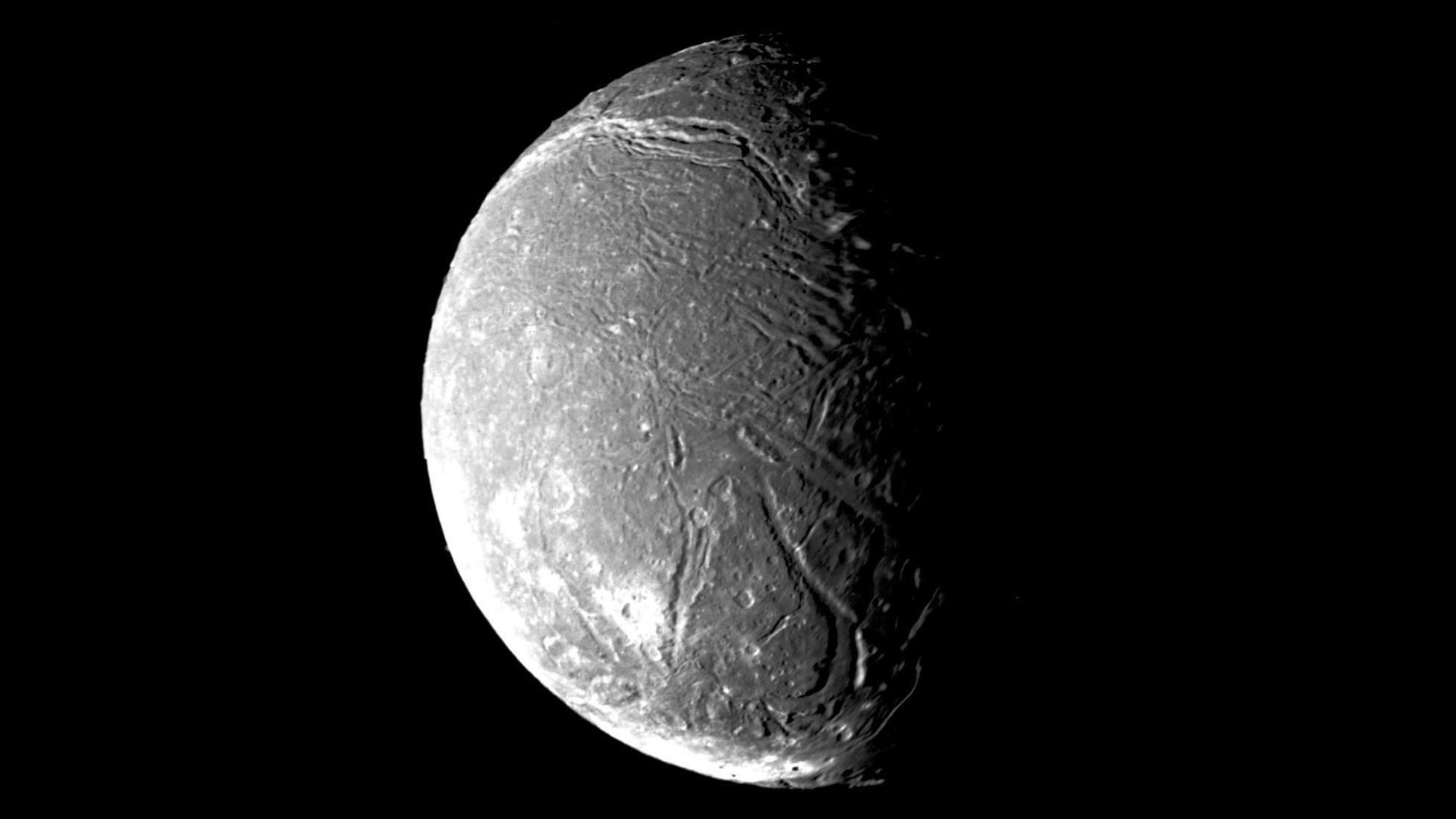
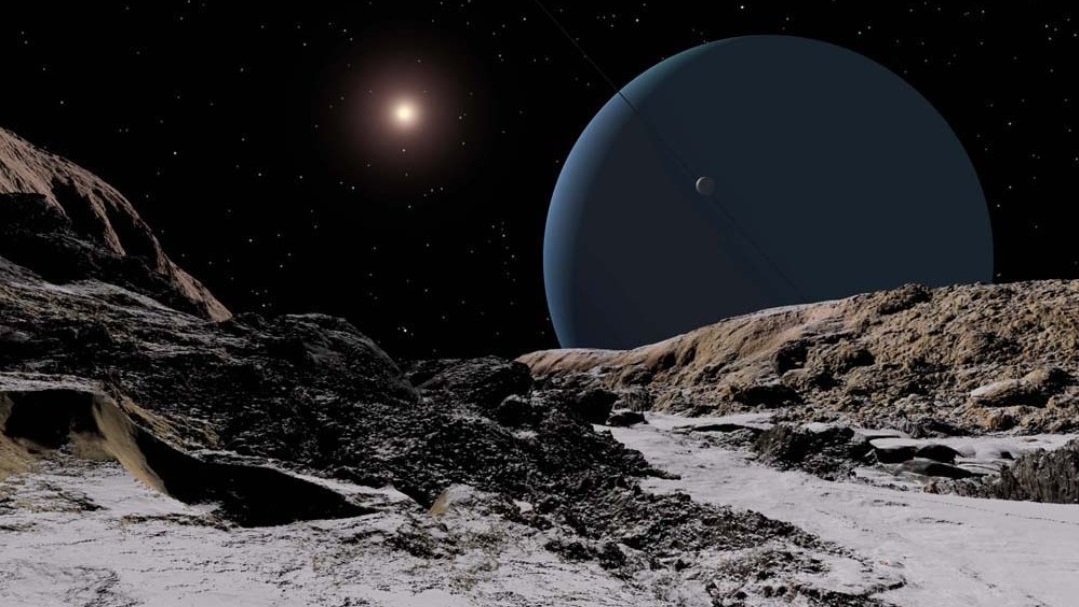
Ariel is Uranus' fourth largest satellite and second in proximity to major satellites. It was discovered in 1851 by William Lassell and named after a character from English literature. It orbits in the equatorial plane of Uranus which, being perpendicular to the planet's orbit around the Sun, causes the satellite to have an extreme seasonal cycle. Like the rest of the Uranian satellites, it probably formed from the accretion disk that surrounded the planet after its formation. It is believed to be composed of a balanced mix of rocks and ice, and differentiated into a rocky core surrounded by a blanket of ice. It has a complex surface, consisting of extensive craterized terrain and cut by systems of escarpments, canyons and ridges. It shows signs of more recent geological activity than in the rest of the satellites, perhaps due to tidal warming.