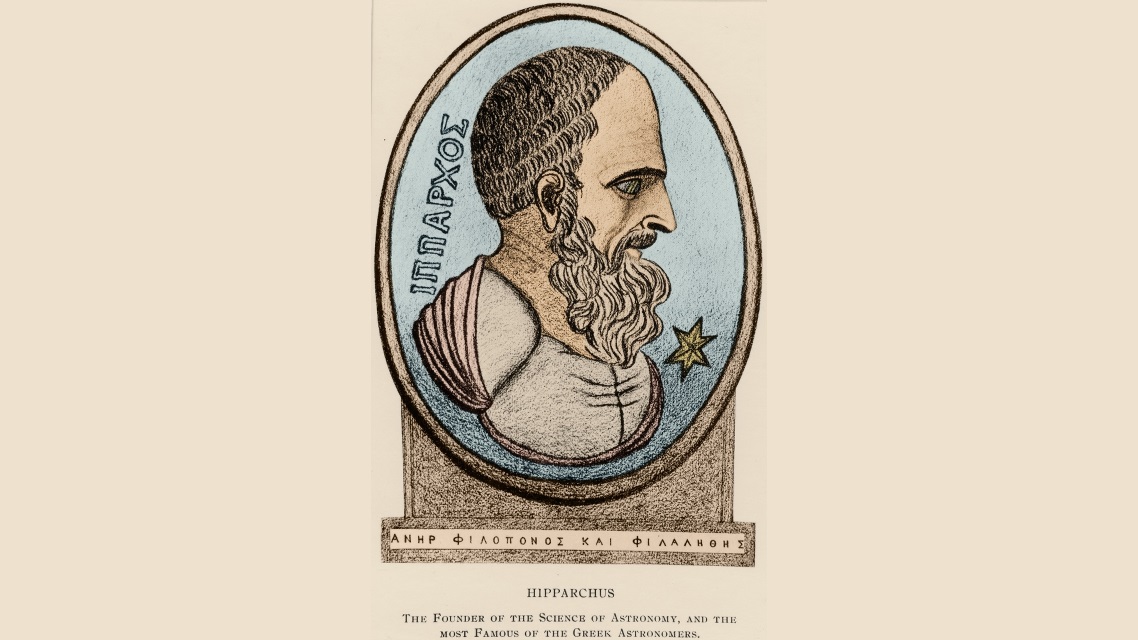
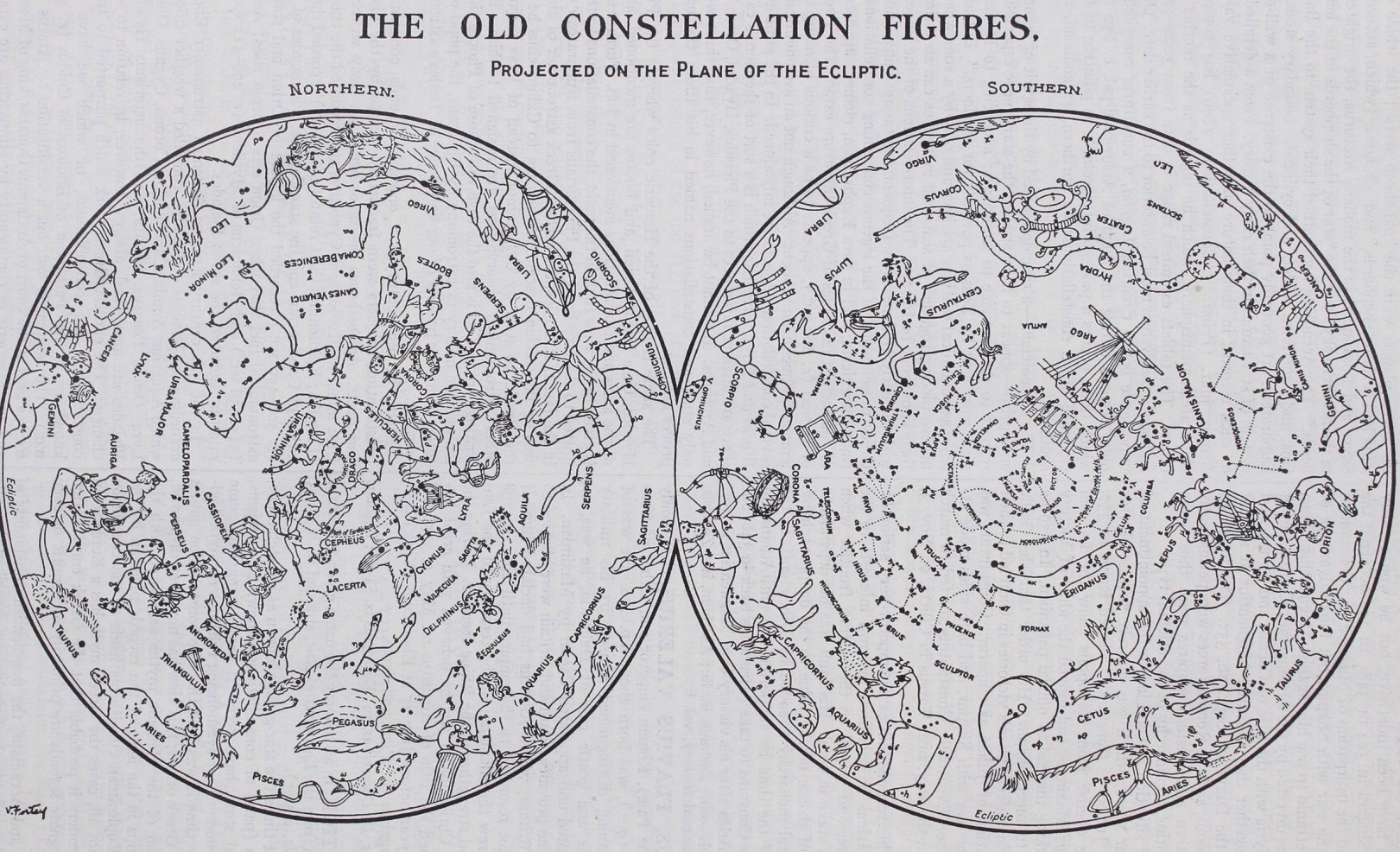
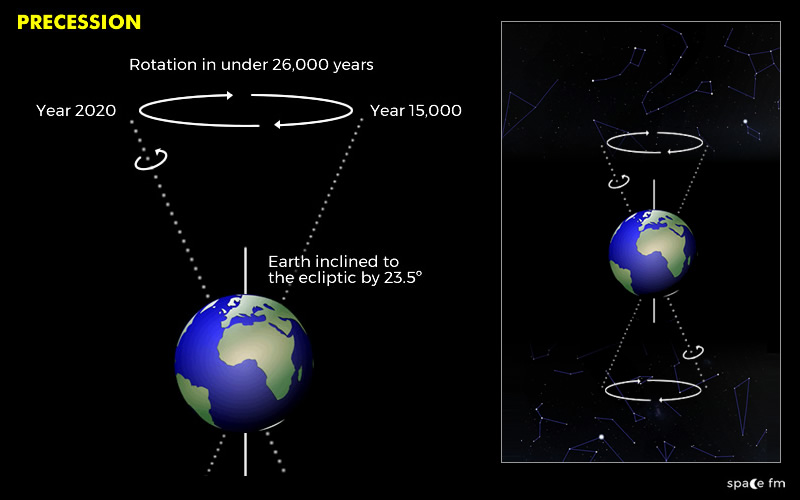
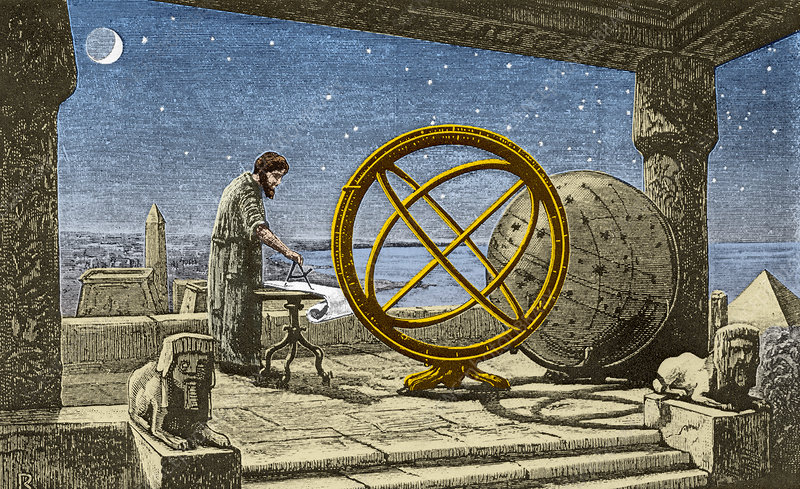
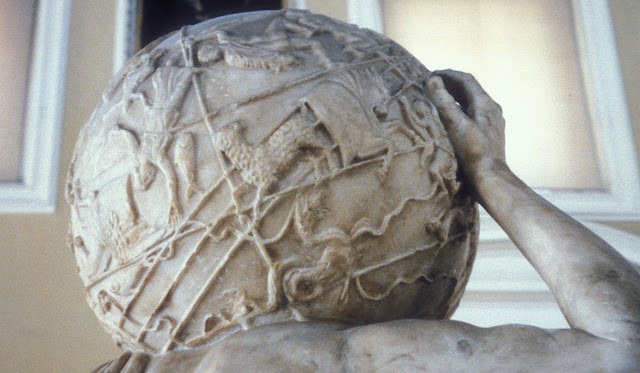
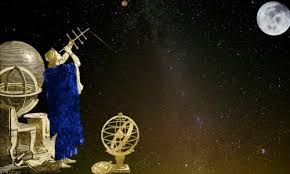
Hipparchus of Nicea (Nicaea, c. -190 / c. -120) was a Greek astronomer, geographer, and mathematician who created the first known catalog of stars. He also divided the day into 24 hours of equal duration, discovered the precession of the equinoxes and the distinction between sidereal year and tropic year, he calculated more accurately the distance measurement Earth-Moon and obliqueness of the ecliptic and is also credited with the invention of trigonometry (for which he is considered the father of trigonometry) and the concepts of geographic longitude and latitude. The star catalog he produced contained the position in ecliptic coordinates of 850 stars. He was influenced by the appearance of a nova star, Nova Scorpii, in the year -134 and by pretending to fix the position of the spring equinox against the background of stars. In order to create such a catalog, Hipparchus invented instruments, especially a theodolite, to indicate positions and magnitudes, so that it was easy to discover if the stars died or were born, if they moved or if they increased or decreased brightness. He also classified the stars according to their intensity, classifying them in magnitudes, according to their degree of brightness.