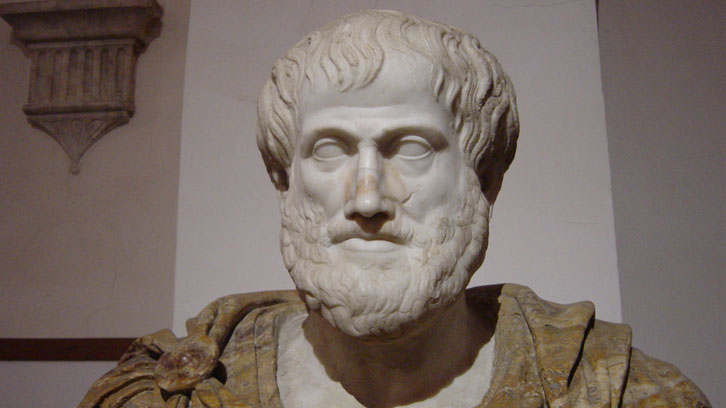
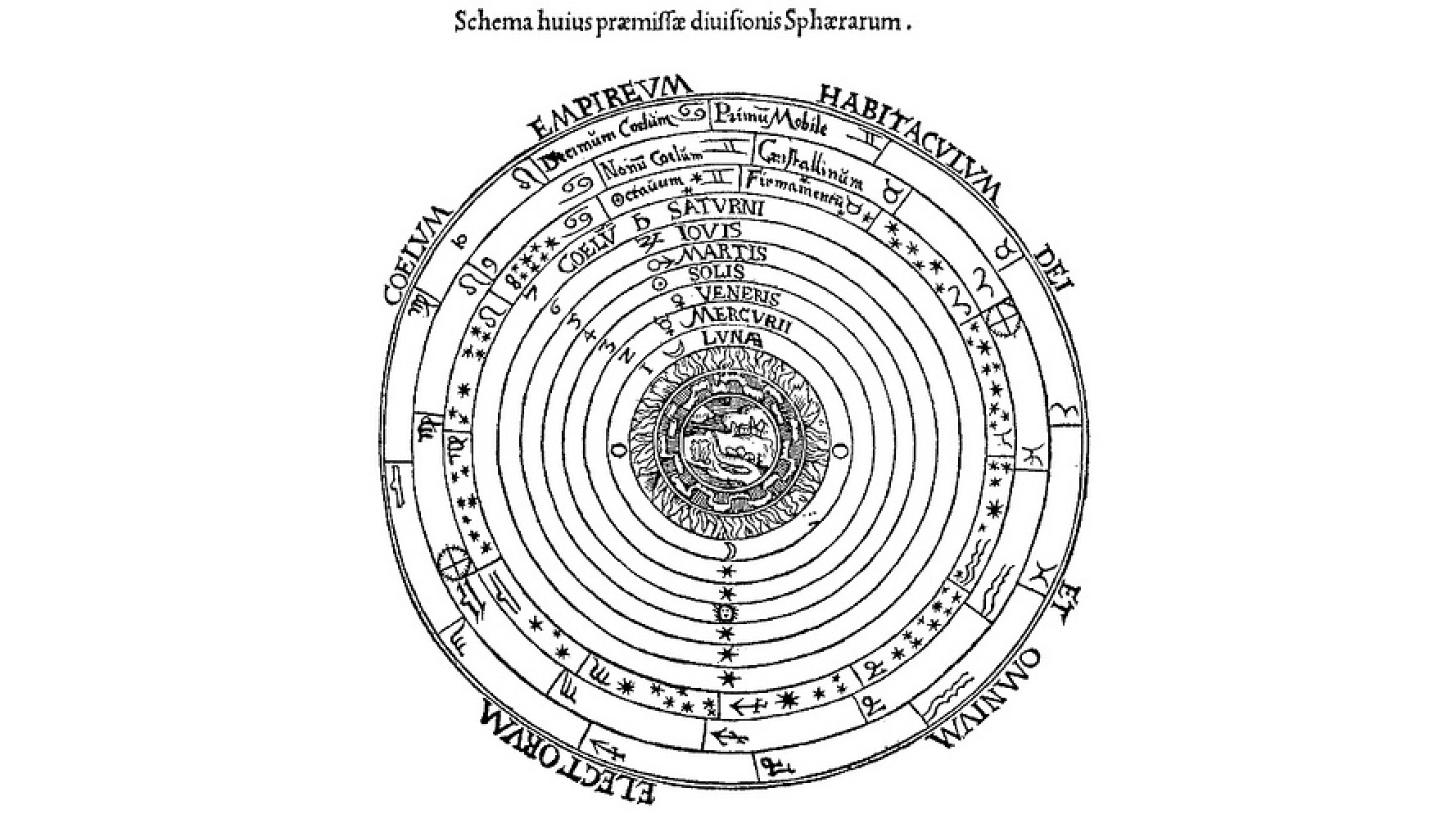
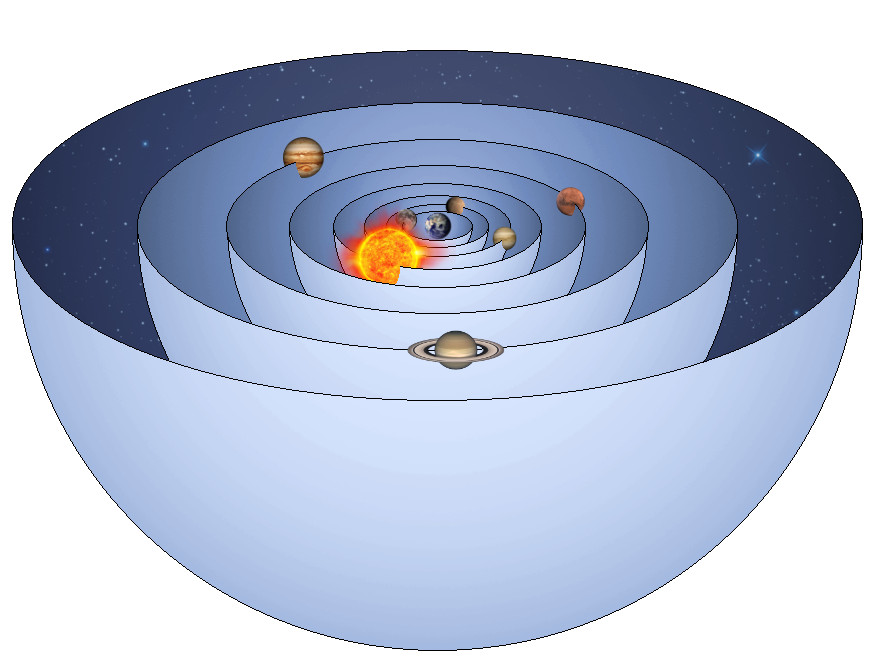
Aristotle (Stagira, -384 / Chalcis, -322) was a philosopher, polymath and scientist considered, along with Plato, the father of Western philosophy. His ideas have exerted an enormous influence on the intellectual history of the West for more than two millennia. Aristotle supported the sphericity of the Earth using logical and mathematical tests, in addition to empirical data, such as the variation of the position of the stars in different places and the round shadow of the Earth projected in lunar eclipses. He proposed the existence of a spherical and finite Cosmos. The Earth was motionless in a geocentric system, while the Sun rotated around it with other planets of the Solar System. Aristotle spoke of the sublunar world, the central part of the Cosmos, in which generation and corruption exist, which would be made up of the four elements: earth, air, fire and water; and the supralunar world, perfect and incorruptible, made up of stars and celestial objects that were embedded in concentric celestial ether spheres that revolved around the Earth.