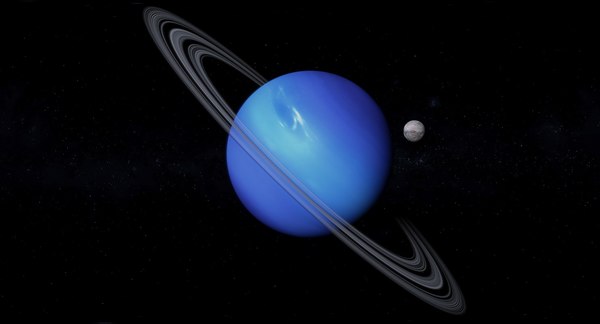
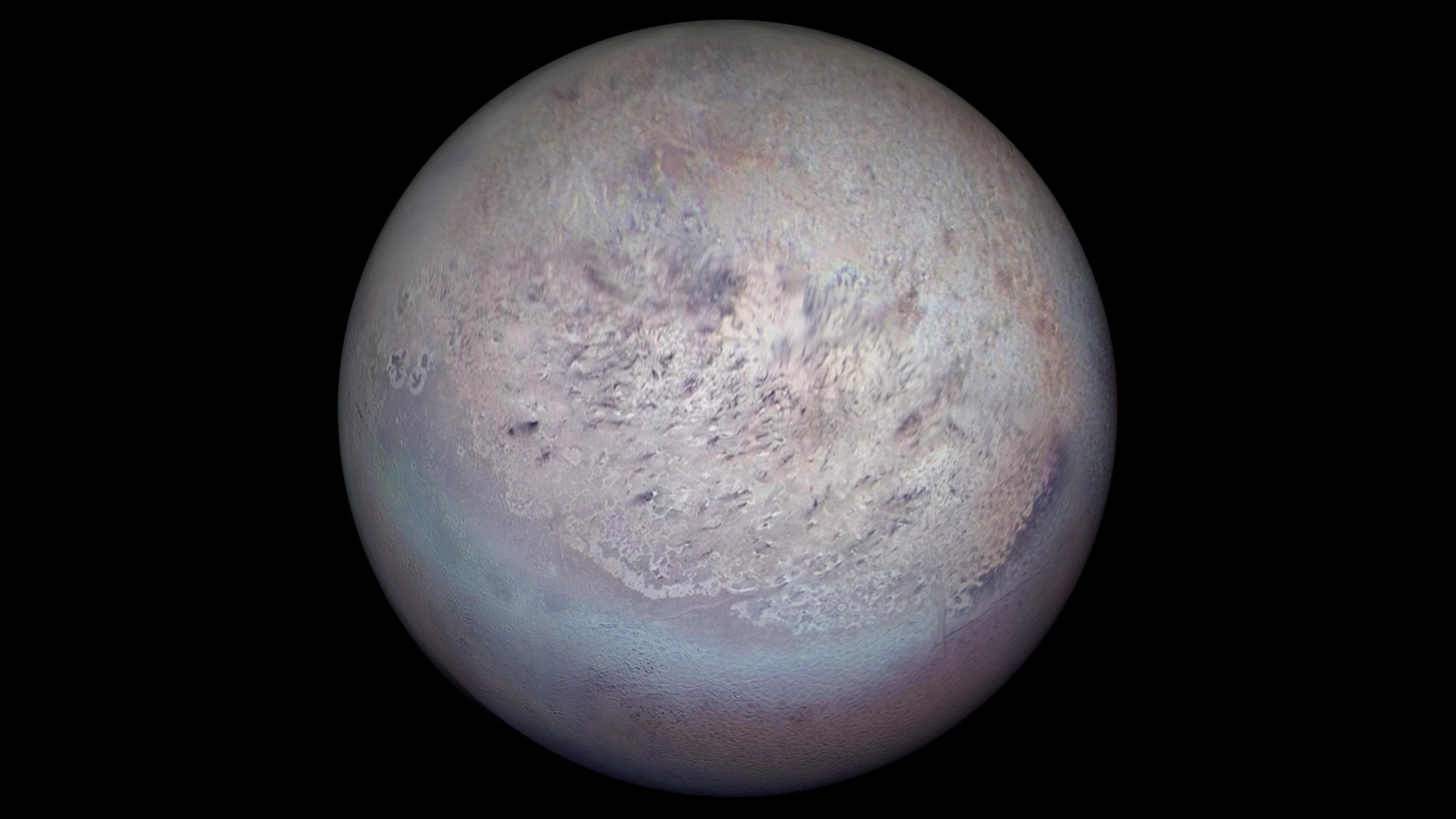
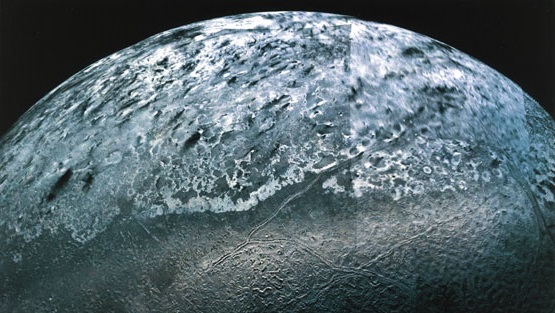
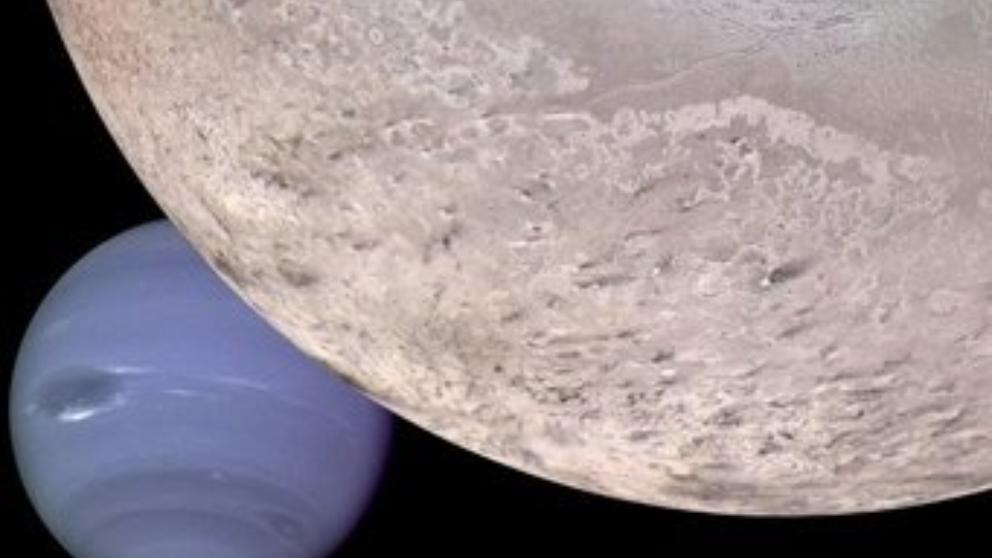
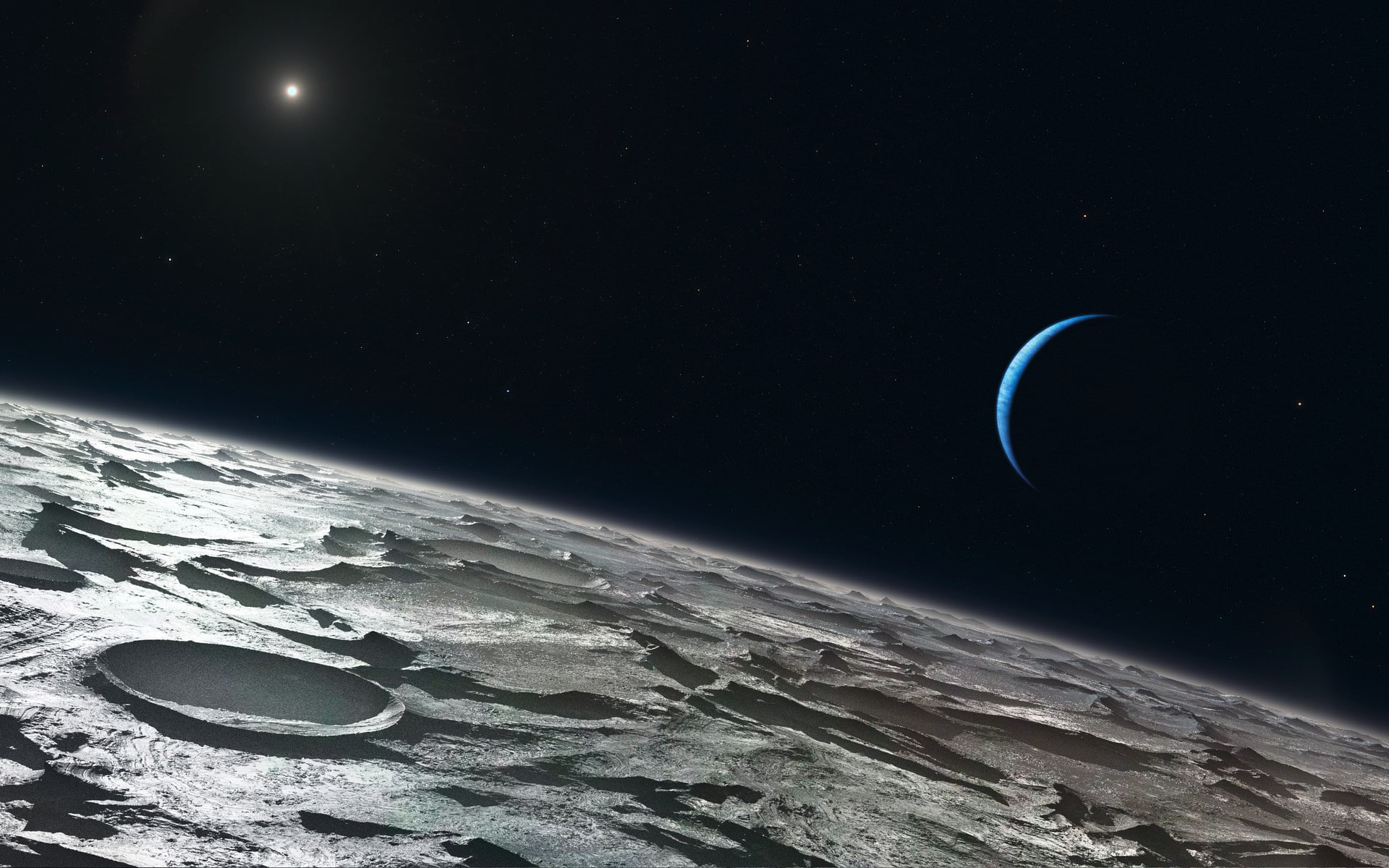
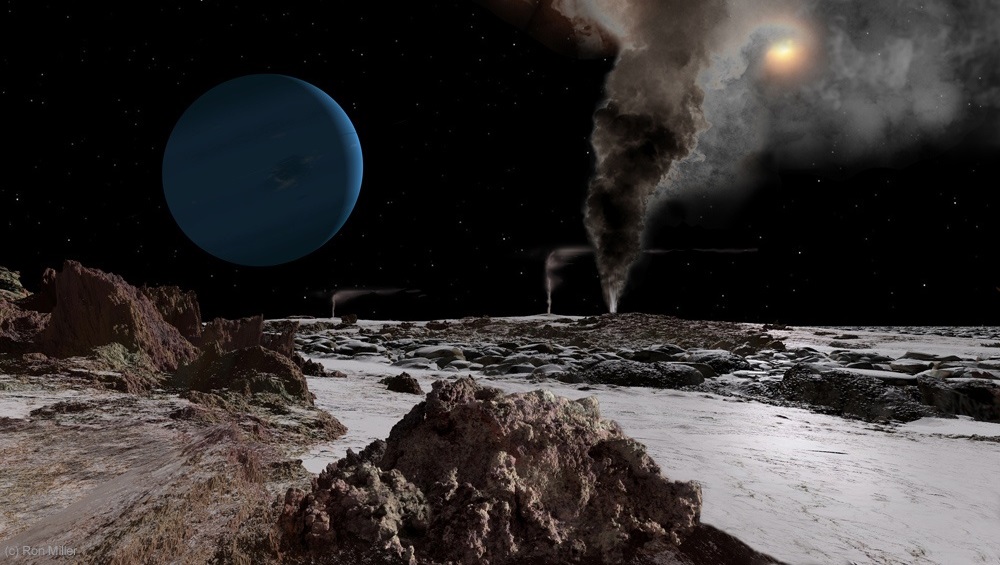
Triton is the largest Neptune satellite and the seventh in the Solar System, with a diameter of 2,707 km. It is also one of the coldest stars in the Solar System (-235° C). Discovered by William Lassell in 1846, just 17 days after the planet's own discovery, it owes its name to the god Triton in Greek mythology. It is the only large moon that has a retrograde orbit, something exceptional in a body of such size. Because of this retrograde orbit and its composition, similar to that of Pluto, it is considered that Triton must have been an object of the Kuiper belt that was captured by the gravitational force of Neptune. Triton is composed of a frozen nitrogen crust on an ice sheet, which is believed to cover a solid core of rock and metal. Triton has an average density of 2,061 g / cm and is approximately 15-35% of ice water.