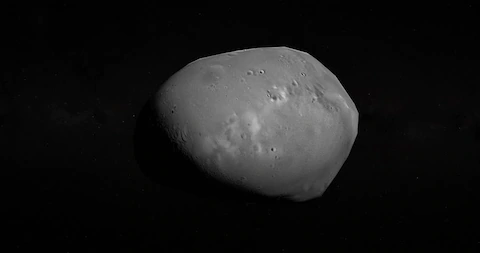
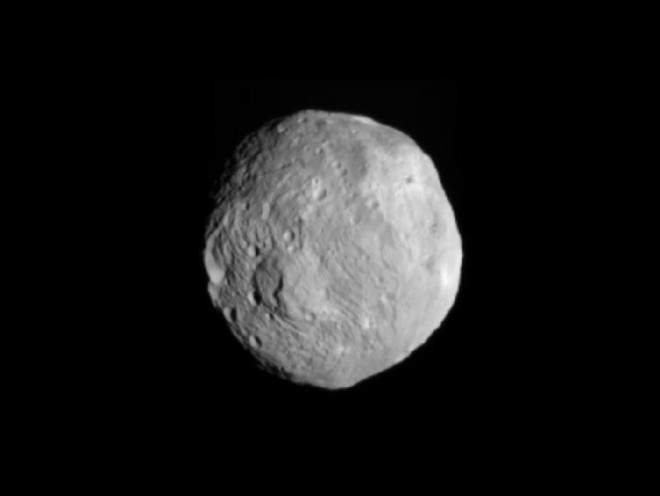
Pallas is one of the largest asteroids in the Solar System. Its orbit is located in the central part of the Asteroids Belt, and has the peculiarity of being somewhat inclined and eccentric for an object of its size. The composition of Pallas is unique but quite similar to that of C-type asteroids. Pallas was the first asteroid discovered after Ceres. It was found by Heinrich Wilhelm Olbers on March 28, 1802, while making observations to locate and determine the orbit of Ceres, using the predictions of the mathematician Carl Friedrich Gauss. Olbers named it in honor of Athena, the Greek goddess of wisdom; a year later, in 1803, the chemical element palladium would be discovered and named after the asteroid. In 1917 the astronomer Kiyotsugu Hirayama, when studying the different known asteroids, discovered that there was a group of asteroids with orbits similar to that of Palas, calling it the Palas Family, of which today more than 10 members are known, and they are known to have identical spetral composition.