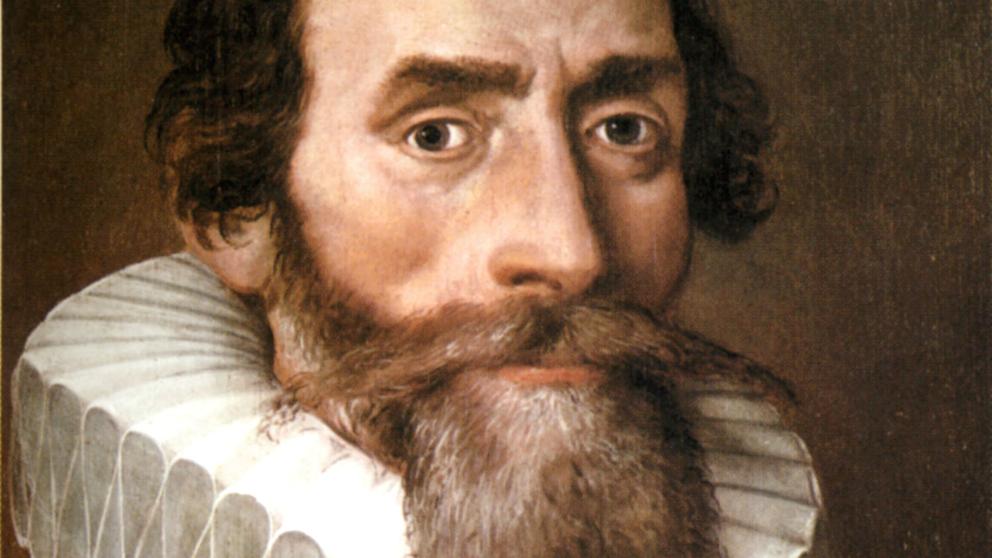
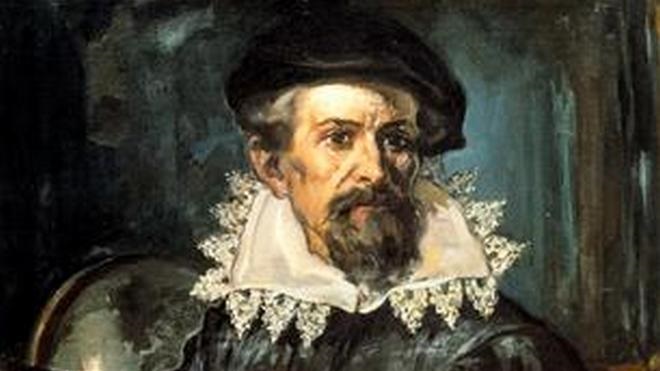
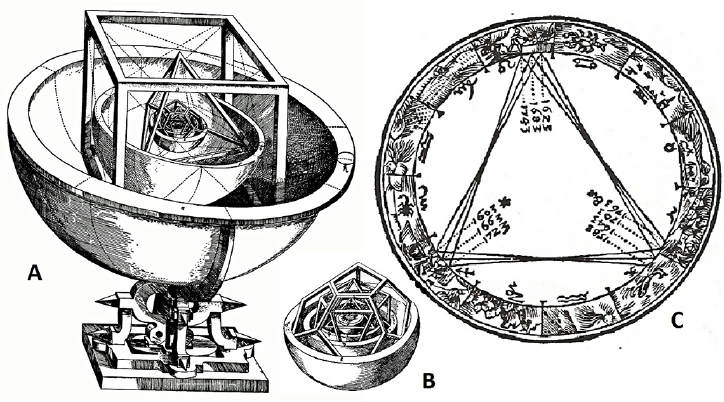
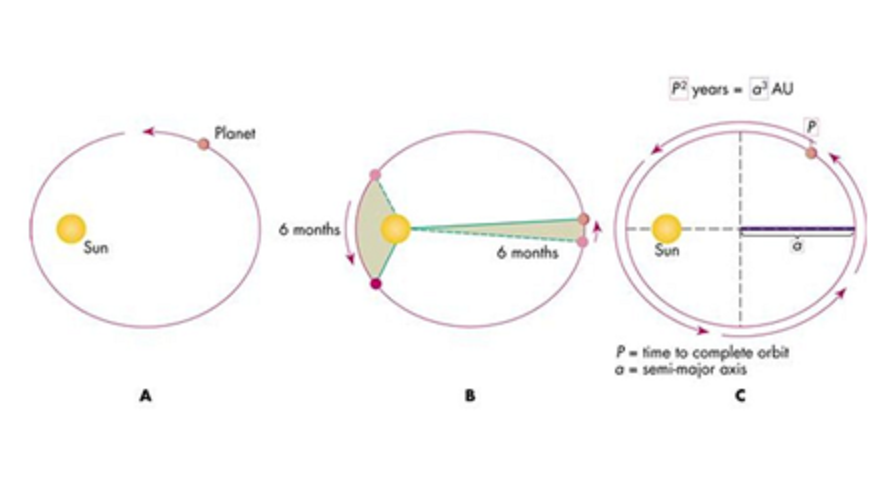
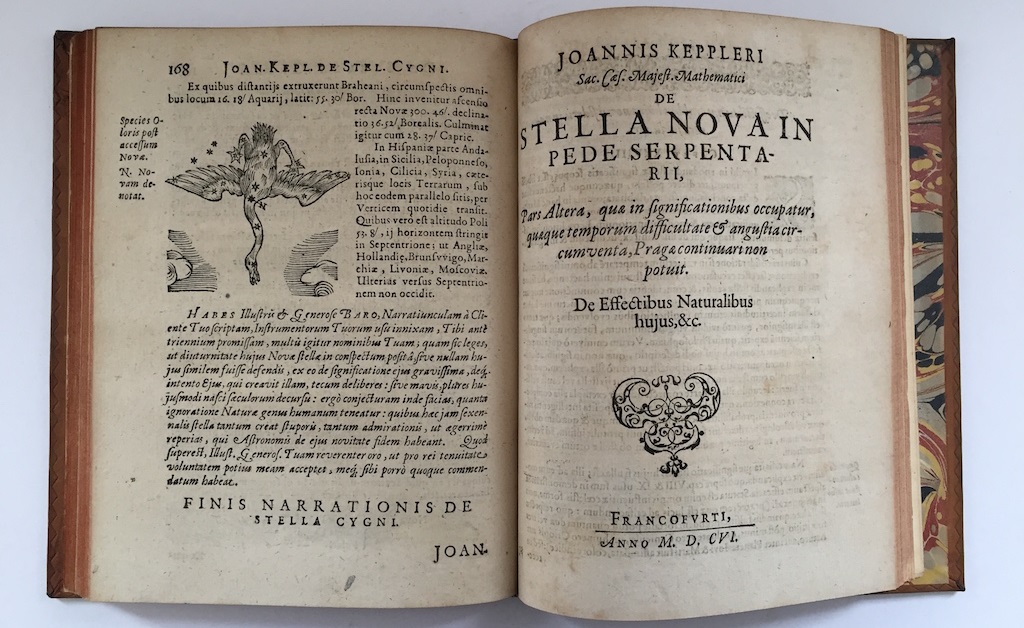
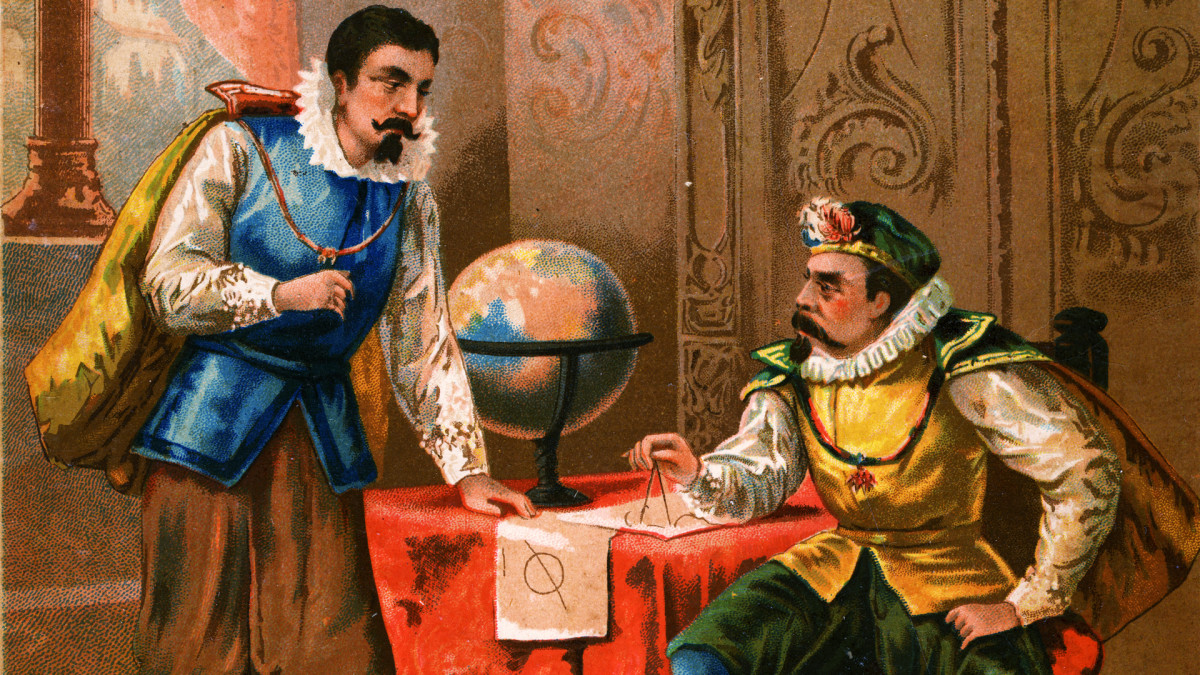
Johannes Kepler (Weil der Stadt, 1571 / Regensburg, 1630), a key figure in the scientific revolution, was a German astronomer, astrologer, and mathematician. Supporter of the Copernicus heliocentric theory, but also as an astrologer, he formulated hypotheses based on a universe in which the planets were located within concentric spheres separated by distances relative to the sizes of the Platonic solids, published in the book Prodromus dissertationum mathematicarum continens mysterium cosmographicum (1596). As he was not a good observer (he had vision problems and the telescope had not yet been invented), in 1600 he left his residence in Graz went to work near Prague with the best observational astronomer of the time, Tycho Brahe, to gain access to his observations and thus be able to corroborate his theory. However, he was unable to access his observations until after Brahe's death in 1602. And after obtaining Brahe's data, far from confirming his theory, he discovered that the data was not compatible with circular orbits and his theory of solids Platonic, until in 1609 he was able to match the data of the orbits with ellipses, results published in his work Astronomia nova together with his first 2 laws on the movement of the planets. In 1619 he published his third law.